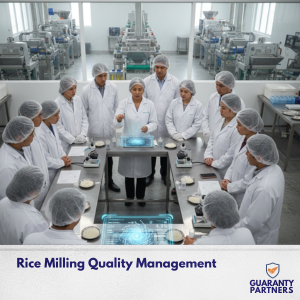
Rice Milling Quality Management
Course Overview
- Understand the principles of rice milling and its impact on quality.
- Identify critical factors affecting rice quality during milling.
- Develop skills to manage and improve rice milling processes.
- Implement quality control measures to ensure product consistency
Training Format:In-class, Virtual, In-house
Location:Lagos, Accra, Nairobi, Kigali
Language:English, French
Nigeria Price:
₦350000
Int'l., (Nigeria) Price:
$1000
Ghana Price:
$4000
Kenya Price:
$5500
Rwanda Price:
$6000
Nigeria Price:₦350000
Int'l., (Nigeria) Price:
$1000
Ghana Price:
$4000
Kenya Price:
$4000
Rwanda Price:
$4000
Nigeria Price: ₦350000
Int'l., (Nigeria) Price:
$1000
Ghana Price: $4000
Kenya Price: $4000
Rwanda Price: $4000
Introduction to Rice Milling
- Overview of the rice milling process.
- Key stages: dehusking, polishing, grading, and packaging.
- Importance of quality management in rice milling.
Factors Affecting Rice Quality
- Grain moisture content and its role in milling.
- Impact of machinery settings on quality.
- Common defects: broken grains, chalkiness, and discoloration.
Quality Control in Rice Milling
- Techniques for quality inspection and monitoring.
- Standards for rice quality and compliance requirements.
- Implementing Good Manufacturing Practices (GMP) in milling operations.
Improving Milling Efficiency and Reducing Losses
- Best practices for optimizing milling yield.
- Strategies to minimize grain breakage and waste.
- Maintenance of milling equipment for consistent performance
1ST BATCH: Tuesday, March 10, 2026 — Friday, March 13, 2026.
2ND BATCH: Tuesday, June 30, 2026 — Friday, July 3, 2026.
3RD BATCH: Tuesday, October 27, 2026 — Friday, October 30, 2026.
The training methodology integrates lectures, interactive discussions, collaborative group exercises, and
illustrative examples. Participants will acquire a blend of theoretical insights and hands-on practical
experience, emphasizing the application of learned techniques. This approach ensures that attendees return
to their professional environments equipped with both the competence and self-assurance to effectively
implement the acquired skills in their responsibilities.