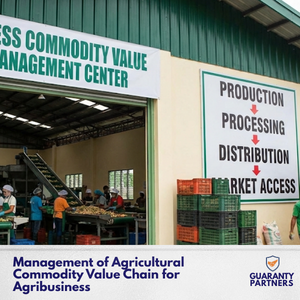
Agricultural Engineering Management Course
Course Overview
- Understand the key principles of agricultural engineering management.
- Develop skills in managing agricultural projects and operations.
- Learn about the integration of technology in agricultural systems.
- Understand the challenges and solutions in managing agricultural engineering resources.
Training Format:In-class, Virtual, In-house
Location:Lagos, Accra, Nairobi, Kigali
Language:English, French
Nigeria Price:
₦350000
Int'l., (Nigeria) Price:
$1000
Ghana Price:
$4000
Kenya Price:
$5500
Rwanda Price:
$6000
Nigeria Price:₦350000
Int'l., (Nigeria) Price:
$1000
Ghana Price:
$4000
Kenya Price:
$4000
Rwanda Price:
$4000
Nigeria Price: ₦350000
Int'l., (Nigeria) Price:
$1000
Ghana Price: $4000
Kenya Price: $4000
Rwanda Price: $4000
Introduction to Agricultural Engineering Management
- Overview of agricultural engineering and its importance.
- Key management principles in agricultural engineering.
- Roles and responsibilities of an agricultural engineer.
- Strategic planning and decision-making in agricultural operations.
Project Management in Agricultural Engineering
- Stages of agricultural engineering projects: planning, design, implementation, and evaluation.
- Budgeting and cost control in agricultural engineering projects.
- Risk management and mitigation strategies.
- Tools and techniques for project monitoring and evaluation.
Technology and Innovation in Agricultural Engineering
- Role of technology in improving agricultural productivity.
- Advances in machinery, irrigation systems, and automation.
- Sustainable agricultural practices and innovations.
- Case studies of successful technological integration in agriculture.
Resource Management and Sustainability in Agricultural Engineering
- Efficient management of land, water, and labor resources.
- Sustainable practices in agricultural engineering.
- Energy management in agricultural operations.
- Legal and environmental considerations in agricultural engineering.
1ST BATCH: Monday, March 16, 2026 — Thursday, March 19, 2026.
2ND BATCH: Tuesday, July 7, 2026 — Friday, July 10, 2026.
3RD BATCH: Tuesday, November 3, 2026 — Friday, November 6, 2026.
The training methodology integrates lectures, interactive discussions, collaborative group exercises, and
illustrative examples. Participants will acquire a blend of theoretical insights and hands-on practical
experience, emphasizing the application of learned techniques. This approach ensures that attendees return
to their professional environments equipped with both the competence and self-assurance to effectively
implement the acquired skills in their responsibilities.