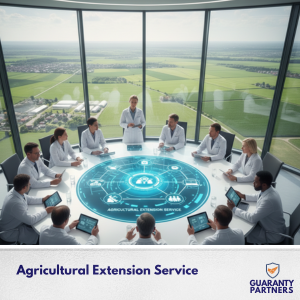
Agricultural Extension Services

Course Overview

• Understand the role and importance of agricultural extension services.
• Identify the different types of extension services and their delivery methods.
• Learn how to assess the effectiveness of agricultural extension programs.
• Gain insights into challenges and opportunities in agricultural extension services

Training Format:In-class, Virtual, In-house

Location:Lagos, Accra, Nairobi, Kigali

Language:English, French

Nigeria Price:
₦350000

Int'l., (Nigeria) Price:
$1000

Ghana Price:
$4000

Kenya Price:
$5500

Rwanda Price:
$6000

Nigeria Price:₦350000

Int'l., (Nigeria) Price:
$1000

Ghana Price:
$4000

Kenya Price:
$4000

Rwanda Price:
$4000

Nigeria Price: ₦350000

Int'l., (Nigeria) Price:
$1000

Ghana Price: $4000

Kenya Price: $4000

Rwanda Price: $4000

Introduction to Agricultural Extension Services
• Definition and scope of agricultural extension services
• Historical development and evolution of extension systems
• Importance of extension in agricultural development
• Key actors in agricultural extension: government, NGOs, private sector
• Extension as a communication process

Extension Delivery Methods
• Traditional methods: face-to-face communication, field visits, farmer groups
• Modern methods: ICT-based extension, radio and television programs, online platforms
• Participatory approaches: farmer-to-farmer extension, community-based methods
• Integrated extension approaches: combining agricultural knowledge with social, economic, and environmental concerns

Assessing the Effectiveness of Agricultural Extension Services
• Indicators for measuring the success of extension programs
• Monitoring and evaluation methods: surveys, feedback, and impact assessments
• Case studies on successful agricultural extension programs
• Role of extension in increasing productivity and improving livelihoods

Challenges and Opportunities in Agricultural Extension
• Common challenges: limited funding, lack of skilled extension workers, poor infrastructure
• Opportunities: integrating climate-smart agriculture, using technology for outreach
• Strategies for improving the efficiency of extension services
• Future trends in agricultural extension: digitalization and sustainable practices

1ST BATCH: Tuesday, April 7, 2026 — Friday, April 10, 2026.

2ND BATCH: Tuesday, July 28, 2026 — Friday, July 31, 2026.

3RD BATCH: Tuesday, November 24, 2026 — Friday, November 27, 2026.

The training methodology integrates lectures, interactive discussions, collaborative group exercises, and
illustrative examples. Participants will acquire a blend of theoretical insights and hands-on practical
experience, emphasizing the application of learned techniques. This approach ensures that attendees return
to their professional environments equipped with both the competence and self-assurance to effectively
implement the acquired skills in their responsibilities.

Facebook
WhatsApp
X
Threads
Telegram
Print