Advanced Mastering Agriculture Financing and Value Chain Lending Course
Course Overview
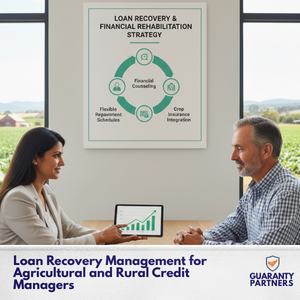
• Understand the key concepts of agriculture financing and its importance in rural development.
• Learn about different financial models for agriculture and how to assess agricultural projects.
• Gain knowledge of value chain lending and its impact on the agricultural sector.
• Master strategies for effective risk management and structuring financing deals for agricultural projects.
Training Format:In-class, Virtual, In-house
Location:Lagos, Accra, Nairobi, Kigali
Language:English, French
Nigeria Price:
₦350000
Int'l., (Nigeria) Price:
$1000
Ghana Price:
$4000
Kenya Price:
$5500
Rwanda Price:
$6000
Nigeria Price:₦350000
Int'l., (Nigeria) Price:
$1000
Ghana Price:
$4000
Kenya Price:
$4000
Rwanda Price:
$4000
Nigeria Price: ₦350000
Int'l., (Nigeria) Price:
$1000
Ghana Price: $4000
Kenya Price: $4000
Rwanda Price: $4000
Introduction to Agricultural Financing and Rural Development
• Overview of agricultural financing: definition, significance, and challenges.
• Role of agriculture in rural economies and food security.
• Types of financing: traditional, alternative, and innovative models.
• Financial institutions involved in agricultural lending: banks, microfinance, and government programs.
• Policy and regulatory frameworks affecting agricultural financing.
Financial Models and Risk Assessment in Agriculture
• Understanding financial products for agricultural projects: loans, grants, equity.
• Risk assessment techniques: identifying, measuring, and mitigating risks in agriculture.
• Evaluating the financial viability of agricultural projects.
• Case studies of successful agricultural financing models.
• Impact of climate change and market volatility on agriculture financing.
Value Chain Lending and Its Impact
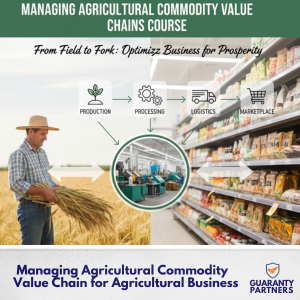
• Introduction to value chain financing: concept and benefits.
• Key players in the agricultural value chain: farmers, processors, retailers, and financiers.
• Understanding how value chain lending enhances agricultural productivity.
• Risk and reward in value chain financing: ensuring sustainable growth.
• Real-world examples of value chain lending models.
Strategies for Structuring Agricultural Financing Deals
• Structuring financing deals for smallholder farmers and agribusinesses.
• Importance of collateral and alternative financing models.
• Leveraging technology for efficient loan disbursement and repayment.
• Developing partnerships with agribusinesses and cooperatives for effective lending.
• Managing and scaling agricultural financing programs.
1ST BATCH: Tuesday, April 14, 2026 — Friday, April 17, 2026.
2ND BATCH: Tuesday, August 4, 2026 — Friday, August 7, 2026.
3RD BATCH: Tuesday, December 1, 2026 — Friday, December 4, 2026.
The training methodology integrates lectures, interactive discussions, collaborative group exercises, and
illustrative examples. Participants will acquire a blend of theoretical insights and hands-on practical
experience, emphasizing the application of learned techniques. This approach ensures that attendees return
to their professional environments equipped with both the competence and self-assurance to effectively
implement the acquired skills in their responsibilities.