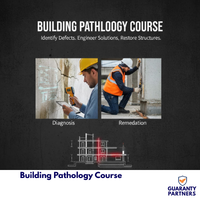
• Understand the principles and methods of building pathology
• Identify and analyze the causes and effects of building failures
• Develop skills to assess and mitigate building defects and hazards
• Apply knowledge to improve building design, construction, and maintenance practices
• Introduction to Building Pathology • Definition and scope of building pathology • Importance of building pathology in construction and maintenance • Overview of building failure types and causes • Building Failure Types and Causes • Structural failures (e.g., foundation, walls, roof) • Non-structural failures (e.g., electrical, plumbing, HVAC) • Environmental and weather-related failures • Human error and maintenance-related failures • Building Defects and Hazards • Common defects and hazards in buildings (e.g., cracks, leaks, mold) • Causes and effects of defects and hazards • Methods for identifying and assessing defects and hazards • Assessment and Mitigation Strategies • Methods for assessing building defects and hazards • Strategies for mitigating and preventing building failures • Best practices for building maintenance and repair • Building Design and Construction Considerations • Design and construction factors contributing to building failures • Importance of proper design and construction practices • Role of building codes and regulations in preventing failures • Case Studies and Group Discussions • Real-world examples of building failures and successes • Group discussions on causes, effects, and mitigation strategies • Opportunities for students to apply knowledge and share experiences
The training methodology integrates lectures, interactive discussions, collaborative group exercises, and illustrative examples. Participants will acquire a blend of theoretical insights and hands-on practical experience, emphasizing the application of learned techniques. This approach ensures that attendees return to their professional environments equipped with both the competence and self-assurance to effectively implement the acquired skills in their responsibilities.