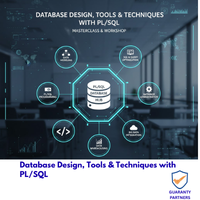
Introduction to Database Design
• Relational database concepts and DBMS
• Logical and physical database design
• Naming conventions and data types
Relational Database Modeling
• Entity-Relationship (ER) modeling
• Normalization techniques
• Referential integrity and constraints
Physical Database Implementation
• Creating database and table definitions using DDL
• Implementing indexes and monitoring their usage
• Estimating space requirements and transaction volumes
PL/SQL Programming
• PL/SQL fundamentals and program structure
• Embedding SQL statements and using conditional statements
• Creating and using stored procedures and functions
• Exception handling and error management
Advanced PL/SQL Concepts
• Working with cursors and ref cursors
• Creating and using packages
• Implementing triggers for auditing and error handling
• Collections and nested tables
Database Performance and Tuning
• Analyzing query processing performance
• Implementing shared plans and parametrization
• Concurrency control and transactions
Database Security
• Defining and implementing schemas and roles
• Implementing table, column, and row-level security
• Using views and stored procedures for security
Case Studies and Best Practices
• Applying course concepts to real-world scenarios
• Discussing best practices in database design and PL/SQL development
Who Can Attend:
• Database administrators (DBAs)
• Application developers
• IT professionals interested in database design and PL/SQL