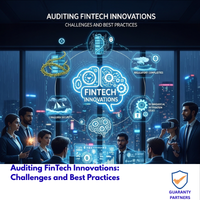
Auditing FinTech Innovations: Challenges and Best Practices
Course Overview
- To understand the core principles of auditing in the context of FinTech innovations.
- To identify the challenges faced in auditing FinTech companies and products.
- To explore best practices for conducting audits in the FinTech space.
- To equip learners with the tools and methodologies for effectively auditing financial technologies.
Training Format:In-class, Virtual, In-house
Location:Lagos, Accra, Nairobi, Kigali
Language:English, French
Nigeria Price:
₦3300000
Int'l., (Nigeria) Price:
$1000
Ghana Price:
$4000
Kenya Price:
$5500
Rwanda Price:
$6000
Nigeria Price:₦3300000
Int'l., (Nigeria) Price:
$1000
Ghana Price:
$4000
Kenya Price:
$4000
Rwanda Price:
$4000
Nigeria Price: ₦3300000
Int'l., (Nigeria) Price:
$1000
Ghana Price: $4000
Kenya Price: $4000
Rwanda Price: $4000
Introduction to FinTech and the Role of Auditing
- Overview of FinTech Innovations
- Definition and scope of FinTech
- Types of FinTech innovations: Blockchain, AI, Digital Payments, Crowdfunding, Robo-Advisory
- Trends and disruptions in financial services
- The Role of Auditing in FinTech
- Importance of auditing in ensuring transparency, trust, and compliance
- Key auditing principles relevant to FinTech
- Regulatory environment: Local and international perspectives
Key Challenges in Auditing FinTech
- Technology Complexity and Rapid Innovation
- Understanding the challenges of auditing fast-evolving technologies
- Issues in auditing blockchain and AI-powered systems
- Data integrity and cybersecurity concerns
- Regulatory Compliance and Legal Challenges
- Navigating evolving regulatory frameworks
- Impact of cross-border regulations on FinTech audits
- Ensuring compliance with financial industry standards (e.g., AML, KYC, GDPR)
Audit Methodologies and Tools for FinTech
- Risk-Based Auditing Approach
- Identifying high-risk areas in FinTech
- Assessing the effectiveness of internal controls
- Tools for evaluating operational risk
- Technology-Driven Audit Tools
- Using data analytics and automation in audits
- Leveraging AI and machine learning for risk assessment
- Blockchain auditing tools and techniques
Best Practices and Future Outlook
- Best Practices for Auditing FinTech Innovations
- Creating an audit framework for FinTech companies
- Developing industry-specific audit standards and benchmarks
- Collaboration with regulators and industry experts
- The Future of Auditing in FinTech
- The role of emerging technologies in the future of auditing
- Preparing for the audit challenges of the next decade
- Case studies of successful FinTech audits
1ST BATCH: Tuesday, April 7, 2026 — Friday, April 10, 2026.
2ND BATCH: Tuesday, July 28, 2026 — Friday, July 31, 2026.
3RD BATCH: Tuesday, November 24, 2026 — Friday, November 27, 2026.
The training methodology integrates lectures, interactive discussions, collaborative group exercises, and
illustrative examples. Participants will acquire a blend of theoretical insights and hands-on practical
experience, emphasizing the application of learned techniques. This approach ensures that attendees return
to their professional environments equipped with both the competence and self-assurance to effectively
implement the acquired skills in their responsibilities.

Facebook
WhatsApp
X
Threads
Telegram
Print