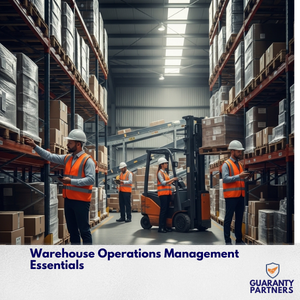
Warehouse Operations Management Essentials
Course Overview
• Understand the fundamental principles and concepts of warehouse management.
• Learn best practices for organizing and optimizing warehouse layout and operations.
• Develop skills in inventory control, stock management, and order fulfillment processes.
• Gain knowledge of warehouse safety regulations and practices to ensure a secure working environment.
• Explore strategies for improving warehouse efficiency, productivity, and cost-effectiveness.
• Learn about the role of technology and automation in modern warehouse operations.
• Develop leadership and communication skills essential for effective warehouse management.
Training Format:In-class, Virtual, In-house
Location:Lagos, Accra, Nairobi, Kigali
Language:English, French
Nigeria Price:
₦3000000
Int'l., (Nigeria) Price:
$1000
Ghana Price:
$4000
Kenya Price:
$5500
Rwanda Price:
$6000
Nigeria Price:₦3000000
Int'l., (Nigeria) Price:
$1000
Ghana Price:
$4000
Kenya Price:
$4000
Rwanda Price:
$4000
Nigeria Price: ₦3000000
Int'l., (Nigeria) Price:
$1000
Ghana Price: $4000
Kenya Price: $4000
Rwanda Price: $4000
Introduction to Warehouse Management
• Importance and objectives of warehouse management
• Role of warehouses in the supply chain
• Key functions and responsibilities of warehouse managers
• Overview of warehouse management systems (WMS)
Warehouse Layout and Design
• Principles of warehouse layout and space utilization
• Types of warehouse layouts (e.g., block stacking, cross-docking, flow-through)
• Factors influencing warehouse design decisions
• Techniques for optimizing storage capacity and efficiency
Inventory Control and Stock Management
• Inventory management techniques and strategies
• Cycle counting vs. physical inventory methods
• Stock replenishment and order fulfillment processes
• Strategies for managing dead stock and obsolete inventory
Warehouse Safety and Security
• Occupational Health and Safety (OHS) regulations in warehouse operations
• Hazard identification and risk assessment
• Safety equipment and procedures for material handling and storage
• Security measures to prevent theft, vandalism, and unauthorized access
Warehouse Operations Best Practices
• Lean warehouse principles and continuous improvement methodologies
• 5S methodology for organizing and maintaining a clean and efficient workspace
• Kaizen techniques for reducing waste and streamlining processes
• Quality management systems (QMS) and ISO standards in warehouse operations
Technology and Automation in Warehousing
• Role of technology in modern warehouse management (e.g., RFID, barcode scanning)
• Automated storage and retrieval systems (AS/RS) and robotic warehouse automation
• Warehouse management software (WMS) features and functionalities
• Integration of IoT, AI, and predictive analytics in warehouse operations
Performance Metrics and Key Performance Indicators (KPIs)
• Key performance indicators (KPIs) for measuring warehouse performance
• Metrics related to inventory accuracy, order fulfillment, and on-time delivery
• Benchmarking warehouse performance against industry standards and best practices
• Using data analytics to identify areas for improvement and drive operational excellence
Leadership and Communication Skills for Warehouse Managers
• Leadership styles and qualities essential for effective warehouse management
• Effective communication strategies for coordinating warehouse activities and teams
• Conflict resolution techniques for handling interpersonal conflicts in the warehouse
• Training and development programs for building a skilled and motivated warehouse workforce
Environmental Sustainability in Warehouse Operations
• Sustainable warehouse practices for reducing environmental impact
• Energy-efficient lighting and HVAC systems
• Waste management and recycling initiatives in warehouse operations
• Green logistics strategies for reducing carbon emissions and transportation costs
Future Trends in Warehouse Management
• Emerging trends and innovations in warehouse technology and automation
• Adoption of omnichannel fulfillment strategies and multi-modal transportation solutions
• Impact of e-commerce growth and changing consumer preferences on warehouse operations
• Future challenges and opportunities in the field of warehouse management
FOR WHOM:
Stores Purchasing and Logistics Personnel in the Public and Private Sectors
1ST BATCH: Tuesday, January 27, 2026 — Friday, January 30, 2026.
2ND BATCH: Tuesday, May 19, 2026 — Friday, May 22, 2026.
3RD BATCH: Tuesday, September 15, 2026 — Friday, September 18, 2026.
The training methodology integrates lectures, interactive discussions, collaborative group exercises, and
illustrative examples. Participants will acquire a blend of theoretical insights and hands-on practical
experience, emphasizing the application of learned techniques. This approach ensures that attendees return
to their professional environments equipped with both the competence and self-assurance to effectively
implement the acquired skills in their responsibilities.