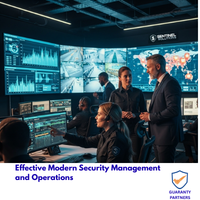
Effective Modern Security Management and Operations
Course Overview
• Apply the basic concept of management to security and explain the specialist role of the security manager
• Plan, develop and organize the human and material resources necessary for the effective operation of a security unit
• Advise on the development of security programs and Standard Operating Procedures
• Monitor and enforce the implementation of security programs and SOPs
• Verify that security personnel can implement security preventive measures
• Advise on the development of emergency plans and manage the security response action necessary in security emergencies involving facilities, terminal buildings, and public access facilities
Training Format:In-class, Virtual, In-house
Location:Lagos, Accra, Nairobi, Kigali
Language:English, French
Nigeria Price:
₦3500000
Int'l., (Nigeria) Price:
$1000
Ghana Price:
$4000
Kenya Price:
$5500
Rwanda Price:
$6000
Nigeria Price:₦3500000
Int'l., (Nigeria) Price:
$1000
Ghana Price:
$4000
Kenya Price:
$4000
Rwanda Price:
$4000
Nigeria Price: ₦3500000
Int'l., (Nigeria) Price:
$1000
Ghana Price: $4000
Kenya Price: $4000
Rwanda Price: $4000
Security Risk Management Framework:
• Security Risk Management
• Loss prevention techniques
• Security Surveillance
• Security Management framework – Working the system
• Key Concepts in Physical Security Resource Management
• Building and Perimeter Security
Addressing Issues Faced by Security:
• Determining job requirements and recruitment criteria – Who makes a Good Security Officer
• Motivating staff and providing feedback
• Deploying, briefing and supervising staff
• Assessing staff performance
• Understanding primary threats to physical security
• Conducting Risk (RA) and Vulnerability (SVA) Assessments
Access Control and Physical Monitoring:
• Electronic Intruder Detection
• Security Contingency Planning
• Physical Security Asset Acquisition
• CCTV Operations
• Operation and Maintenance of Physical Security Resources
• Situational Awareness
Overview of Security Planning and Investigations:
• Security and Emergency Planning documentation
• Responding to major security emergencies
• Security Policies and Procedures
• Defining Proposed Resource Outcomes and Cost-Effectiveness
• Considering Life-Cycle, Warranty and Preventive Maintenance
• Industry Investigation Techniques
Information Security:
• Finding the balance between public facilitation and security measures
• Security Management Systems (SMS)
• Close Protection Basics
• Determining Resource Support
• Physical Security/Information Technology Integration
1ST BATCH: Tuesday, March 10, 2026 — Friday, March 13, 2026.
2ND BATCH: Tuesday, July 7, 2026 — Friday, July 10, 2026.
3RD BATCH: Tuesday, November 3, 2026 — Friday, November 6, 2026.
The training methodology integrates lectures, interactive discussions, collaborative group exercises, and
illustrative examples. Participants will acquire a blend of theoretical insights and hands-on practical
experience, emphasizing the application of learned techniques. This approach ensures that attendees return
to their professional environments equipped with both the competence and self-assurance to effectively
implement the acquired skills in their responsibilities.