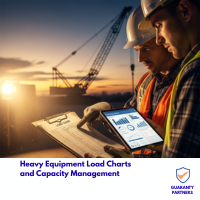
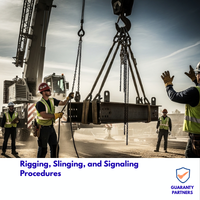
To provide participants with knowledge and practical skills for interpreting load charts and managing equipment capacity safely and efficiently. The course focuses on understanding load limitations, safe lifting practices, and capacity planning to prevent accidents and ensure optimal performance of heavy equipment in construction, mining, and industrial operations.
Introduction to Load Charts and Capacity Management
Importance of load charts for safe equipment operation ● Roles and responsibilities of operators and site supervisors ● Understanding the relationship between load weight, equipment type, and stability ● Overview of regulatory and industry standards
Understanding Load Charts
Components of a load chart: boom length, angle, radius, and rated load ● Interpreting load capacities for different positions and configurations ● Determining safe working loads for cranes, loaders, and other heavy equipment ● Identifying limitations and warnings on load charts
Capacity Management Principles
Calculating total load, including attachments and accessories ● Assessing ground conditions and stability factors ● Planning lifts and movements according to equipment capacity ● Preventing overloading and tipping hazards
Operational Techniques Using Load Charts
Pre-lift planning and selection of proper machine configuration ● Positioning equipment and load safely ● Adjusting lift operations according to radius, boom angle, and terrain ● Coordinating with riggers and signalers for safe handling
Safety Practices and Compliance
Pre-operation inspection and verification of equipment and charts ● Use of personal protective equipment (PPE) ● Adherence to manufacturer guidelines and regulatory requirements ● Documenting lifts and capacity planning for safety and accountability
The training methodology integrates lectures, interactive discussions, collaborative group exercises, and illustrative examples. Participants will acquire a blend of theoretical insights and hands-on practical experience, emphasizing the application of learned techniques. This approach ensures that attendees return to their professional environments equipped with both the competence and self-assurance to effectively implement the acquired skills in their responsibilities.