
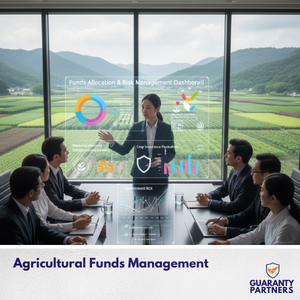
Agricultural Funds Management
Course Overview
By the end of this course, participants will be able to:
• Understand the principles and importance of fund management in the agricultural sector.
• Analyze various sources of agricultural funds and financing mechanisms.
• Develop effective strategies for managing agricultural funds and resources.
• Apply financial management tools to optimize the utilization of agricultural funds.
• Understand risk management and its role in agricultural funding.
• Assess the regulatory and policy framework surrounding agricultural financing.
• Manage funds effectively to ensure the sustainability and growth of agricultural projects.
Training Format:In-class, Virtual, In-house
Location:Lagos, Accra, Nairobi, Kigali
Language:English, French
Nigeria Price:
₦350000
Int'l., (Nigeria) Price:
$1000
Ghana Price:
$4000
Kenya Price:
$5500
Rwanda Price:
$6000
Nigeria Price:₦350000
Int'l., (Nigeria) Price:
$1000
Ghana Price:
$4000
Kenya Price:
$4000
Rwanda Price:
$4000
Nigeria Price: ₦350000
Int'l., (Nigeria) Price:
$1000
Ghana Price: $4000
Kenya Price: $4000
Rwanda Price: $4000
Overview of Agricultural Funds
o Definition of agricultural funds
o Importance of fund management in agriculture
Types of Agricultural Funds
o Public and private funds
o National and international funding sources
o Grants, loans, and equity funding
The Role of Funds in Agricultural Development
o Funding for agricultural infrastructure
o Supporting innovation and technology adoption
o Financing for sustainable agriculture practices
Government Programs and Policies
o National agricultural policies and their impact on funding
o Government-backed loans, subsidies, and grants
o Public-private partnerships in agriculture
Private Sector and Commercial Lending
o Commercial banks and microfinance institutions
o Venture capital and impact investing in agriculture
o Agricultural cooperatives and farmer associations
International Financing
o Multilateral organizations (e.g., World Bank, FAO)
o Foreign direct investment (FDI) in agriculture
o Crowdfunding and digital finance in agriculture
Developing a Financial Plan for Agricultural Projects
o Cash flow projections and budgeting for agriculture
o Estimating capital requirements for agricultural ventures
o Planning for operational expenses and revenues
Cost-Benefit Analysis in Agriculture
o Evaluating financial feasibility of agricultural investments
o Risk-adjusted return on investment (ROI)
o Long-term financial sustainability of agricultural enterprises
Understanding Agricultural Risks
o Types of risks: climatic, financial, market, and operational risks
o Mitigating risks in agricultural projects
Insurance and Hedging Mechanisms
o Agricultural insurance (crop insurance, livestock insurance)
o Hedging strategies in agricultural finance
Crisis Management and Recovery Planning
o Risk recovery plans and strategies for fund management
o Navigating through agricultural emergencies (e.g., natural disasters, market volatility)
Fund Allocation and Monitoring Tools
o Financial software and tools for tracking funds
o Key performance indicators (KPIs) for agricultural funds management
Financial Reporting and Auditing
o Budget monitoring and financial reporting systems
o Auditing agricultural funds to ensure compliance and efficiency
Investment Strategies for Agricultural Funds
o Long-term investment planning
o Evaluating and choosing the right funding vehicles for agriculture
Overview of Agricultural Financing Regulations
o National and international regulations in agricultural finance
o Understanding the legal framework for agricultural funds
Government and Institutional Roles
o Regulatory bodies and their role in agricultural finance
o Public policies promoting agricultural investments and funding
Compliance and Reporting Obligations
o Ensuring transparency and accountability in fund management
o Managing audits, tax compliance, and legal documentation
1ST BATCH: Tuesday, February 24, 2026 — Friday, February 27, 2026.
2ND BATCH: Tuesday, June 16, 2026 — Friday, February 20, 2026.
3RD BATCH: Tuesday, October 13, 2026 — Friday, October 16, 2026.
The training methodology integrates lectures, interactive discussions, collaborative group exercises, and
illustrative examples. Participants will acquire a blend of theoretical insights and hands-on practical
experience, emphasizing the application of learned techniques. This approach ensures that attendees return
to their professional environments equipped with both the competence and self-assurance to effectively
implement the acquired skills in their responsibilities.