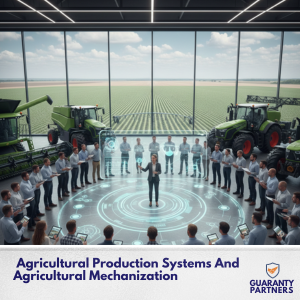
Agricultural Production Systems and Agricultural Mechanization

Course Overview

  • Understand the key concepts of agricultural production systems and their components.
  • Learn about different agricultural production systems and their applications.
  • Gain knowledge of agricultural mechanization and its role in enhancing productivity.
  • Identify the tools and machinery used in modern agricultural practices.

Training Format:In-class, Virtual, In-house

Location:Lagos, Accra, Nairobi, Kigali

Language:English, French

Nigeria Price:
₦350000

Int'l., (Nigeria) Price:
$1000

Ghana Price:
$4000

Kenya Price:
$5500

Rwanda Price:
$6000

Nigeria Price:₦350000

Int'l., (Nigeria) Price:
$1000

Ghana Price:
$4000

Kenya Price:
$4000

Rwanda Price:
$4000

Nigeria Price: ₦350000

Int'l., (Nigeria) Price:
$1000

Ghana Price: $4000

Kenya Price: $4000

Rwanda Price: $4000

Introduction to Agricultural Production Systems

  • Definition and types of agricultural production systems (e.g., subsistence, commercial, mixed farming).
  • Components of agricultural production systems (land, labor, capital, technology).
  • Role of agricultural production systems in food security and rural development.

Principles of Agricultural Mechanization

  • Overview of agricultural mechanization and its importance in modern farming.
  • The evolution of agricultural machinery from traditional tools to modern equipment.
  • Benefits of mechanization: increased efficiency, reduced labor costs, and improved productivity.

Key Agricultural Machinery and Equipment

  • Tractors: Types, functions, and applications in different farming systems.
  • Harvesting machines: Combine harvesters, reapers, and their uses.
  • Irrigation systems: Mechanized irrigation tools and technologies for water management.
  • Soil preparation and tillage equipment: Plows, cultivators, and their role in land preparation.

Challenges and Future of Agricultural Mechanization

  • Barriers to mechanization in developing countries: cost, access to technology, and training.
  • The future of agricultural mechanization: smart farming, automation, and the role of drones and AI.
  • Sustainable practices in mechanization: minimizing environmental impact while enhancing productivity.

1ST BATCH: Tuesday, March 10, 2026 — Friday, March 13, 2026.

2ND BATCH: Tuesday, June 30, 2026 — Friday, July 3, 2026.

3RD BATCH: Tuesday, October 27, 2026 — Friday, October 30, 2026.

The training methodology integrates lectures, interactive discussions, collaborative group exercises, and
illustrative examples. Participants will acquire a blend of theoretical insights and hands-on practical
experience, emphasizing the application of learned techniques. This approach ensures that attendees return
to their professional environments equipped with both the competence and self-assurance to effectively
implement the acquired skills in their responsibilities.

Facebook
WhatsApp
X
Threads
Telegram
Print