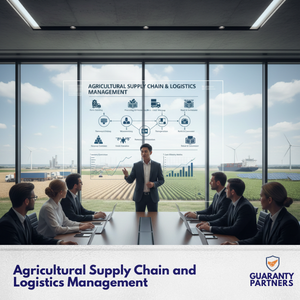
Agricultural Supply Chain and Logistics Management

Course Overview

Understand the key components of agricultural supply chains and logistics management.
• Learn the challenges and strategies for managing agricultural logistics.
• Develop skills in optimizing supply chain processes for efficiency and cost-effectiveness.
• Explore the role of technology in improving agricultural supply chain operations.

Training Format:In-class, Virtual, In-house

Location:Lagos, Accra, Nairobi, Kigali

Language:English, French

Nigeria Price:
₦350000

Int'l., (Nigeria) Price:
$1000

Ghana Price:
$4000

Kenya Price:
$5500

Rwanda Price:
$6000

Nigeria Price:₦350000

Int'l., (Nigeria) Price:
$1000

Ghana Price:
$4000

Kenya Price:
$4000

Rwanda Price:
$4000

Nigeria Price: ₦350000

Int'l., (Nigeria) Price:
$1000

Ghana Price: $4000

Kenya Price: $4000

Rwanda Price: $4000

Introduction to Agricultural Supply Chain Management
• Overview of agricultural supply chains and logistics.
• Key stakeholders in agricultural supply chains: farmers, suppliers, processors, distributors, and retailers.
• The flow of goods and services in the agricultural supply chain.
• Importance of effective logistics management in agriculture.
• Challenges faced in agricultural supply chain management (e.g., perishability, seasonality, transportation).

Logistics in Agricultural Supply Chains
• Definition and role of logistics in agriculture.
• Transportation systems for agricultural products.
• Storage and warehousing of perishable goods.
• Distribution channels and their impact on supply chain efficiency.
• Cold chain logistics for fresh produce.
• Packaging and labeling requirements for agricultural products.

Supply Chain Optimization in Agriculture
• Strategies for reducing waste and improving efficiency.
• Inventory management techniques for agricultural products.
• Demand forecasting and its impact on supply chain decisions.
• Role of procurement and supplier relationship management.
• Cost management in agricultural supply chains.

Technology in Agricultural Supply Chain Management
• Use of technology in enhancing supply chain visibility.
• Role of data analytics in decision-making and forecasting.
• E-commerce and digital platforms for agricultural product distribution.
• The impact of blockchain technology in ensuring traceability and transparency.
• Emerging technologies: drones, IoT, and AI in agricultural logistics.


1ST BATCH: Tuesday, January 27, 2026 — Friday, January 30, 2026.

2ND BATCH: Tuesday, May 19, 2026 — Friday, May 22, 2026.

3RD BATCH: Tuesday, September 15, 2026 — Friday, September 18, 2026.

The training methodology integrates lectures, interactive discussions, collaborative group exercises, and
illustrative examples. Participants will acquire a blend of theoretical insights and hands-on practical
experience, emphasizing the application of learned techniques. This approach ensures that attendees return
to their professional environments equipped with both the competence and self-assurance to effectively
implement the acquired skills in their responsibilities.

Facebook
WhatsApp
X
Threads
Telegram
Print