• Understand the types and sources of agricultural waste and their environmental impacts.
• Explore pollution control strategies for sustainable agricultural practices.
• Learn about modern technologies for efficient agricultural waste management.
• Develop skills to design and implement eco-friendly waste management solution
Understanding Agricultural Waste and Its Impact
• Types and sources of agricultural waste (organic and inorganic).
• Environmental consequences of improper waste disposal.
• Regulatory frameworks for agricultural waste management.
Pollution Control Strategies in Agriculture
• Best practices for controlling soil, water, and air pollution.
• Waste reduction and reuse techniques.
• Integrating sustainable agricultural practices to minimize pollution.
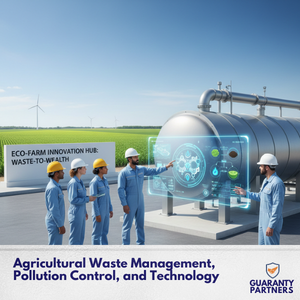
Technologies for Agricultural Waste Management
• Composting and biogas production.
• Waste-to-energy technologies and their applications.
• Emerging innovations: biochar, anaerobic digestion, and precision farming tools.
Developing and Implementing Waste Management Plans
• Steps to design a waste management plan for farms.
• Case studies on successful agricultural waste management.
• Collaboration with stakeholders for sustainable outcomes.
The training methodology integrates lectures, interactive discussions, collaborative group exercises, and illustrative examples. Participants will acquire a blend of theoretical insights and hands-on practical experience, emphasizing the application of learned techniques. This approach ensures that attendees return to their professional environments equipped with both the competence and self-assurance to effectively implement the acquired skills in their responsibilities.