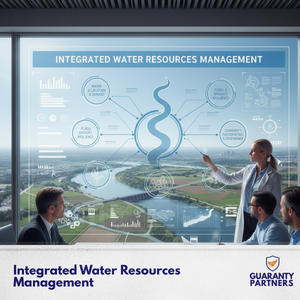
Integrated Water Resources Management

Course Overview

By the end of this course, participants will be able to:

  • Understand the principles and concepts of Integrated Water Resources Management (IWRM).
  • Analyze the interconnections between water, environment, and socio-economic systems.
  • Identify and address challenges in water resource management through integrated approaches.
  • Apply tools and frameworks for sustainable water management.
  • Develop strategies for stakeholder engagement and collaboration in water resource management.
  • Explore the impact of climate change, population growth, and technology on water resources.
  • Design and implement IWRM plans for sustainable development.

Training Format:In-class, Virtual, In-house

Location:Lagos, Accra, Nairobi, Kigali

Language:English, French

Nigeria Price:
₦350000

Int'l., (Nigeria) Price:
$1000

Ghana Price:
$4000

Kenya Price:
$5500

Rwanda Price:
$6000

Nigeria Price:₦350000

Int'l., (Nigeria) Price:
$1000

Ghana Price:
$4000

Kenya Price:
$4000

Rwanda Price:
$4000

Nigeria Price: ₦350000

Int'l., (Nigeria) Price:
$1000

Ghana Price: $4000

Kenya Price: $4000

Rwanda Price: $4000

Introduction to IWRM

  • Definition and key principles of IWRM
  • History and evolution of IWRM practices
  • The need for an integrated approach to water management
  • Global and regional perspectives on water resources

Water Resources and Ecosystems

  • The hydrological cycle and its significance
  • Understanding surface water and groundwater systems
  • Water quality and its impact on ecosystems
  • Ecosystem-based approaches to water management

Governance and Policy Frameworks

  • Water laws and policies at local, national, and international levels
  • Institutional frameworks for water management
  • Role of governments, NGOs, and private sectors in IWRM
  • Transboundary water management and conflict resolution

Stakeholder Engagement and Public Participation

  • Identifying stakeholders in water management
  • Techniques for effective stakeholder engagement
  • Building consensus and resolving conflicts in water management
  • Community-based water resource management

Tools and Techniques for IWRM

  • Geographic Information Systems (GIS) in water resource planning
  • Decision Support Systems (DSS) for water management
  • Economic tools: Cost-benefit analysis and water pricing
  • Monitoring and evaluation frameworks for water projects

Climate Change and Water Resources

  • Impacts of climate change on water availability and quality
  • Strategies for climate adaptation in water resource management
  • Integrated approaches for drought and flood management
  • Role of technology in mitigating climate risks

1ST BATCH: Tuesday, January 20, 2026 — Friday, January 23, 2026.

2ND BATCH: Tuesday, May 12, 2026 — Friday, May 15, 2026.

3RD BATCH: Tuesday, September 8, 2026 — Friday, September 11, 2026.

The training methodology integrates lectures, interactive discussions, collaborative group exercises, and
illustrative examples. Participants will acquire a blend of theoretical insights and hands-on practical
experience, emphasizing the application of learned techniques. This approach ensures that attendees return
to their professional environments equipped with both the competence and self-assurance to effectively
implement the acquired skills in their responsibilities.

Facebook
WhatsApp
X
Threads
Telegram
Print