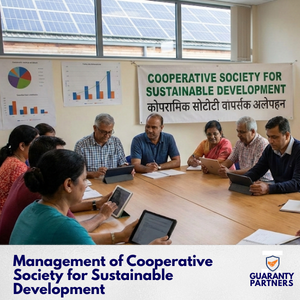
Management of Cooperative Society for Sustainable Development

Course Overview

  • Understand the principles and objectives of cooperative societies.
  • Learn the key components of effective management in cooperatives.
  • Analyze the role of cooperatives in promoting sustainable development.
  • Develop strategies for improving the performance of cooperatives in the context of community development.

Training Format:In-class, Virtual, In-house

Location:Lagos, Accra, Nairobi, Kigali

Language:English, French

Nigeria Price:
₦350000

Int'l., (Nigeria) Price:
$1000

Ghana Price:
$4000

Kenya Price:
$5500

Rwanda Price:
$6000

Nigeria Price:₦350000

Int'l., (Nigeria) Price:
$1000

Ghana Price:
$4000

Kenya Price:
$4000

Rwanda Price:
$4000

Nigeria Price: ₦350000

Int'l., (Nigeria) Price:
$1000

Ghana Price: $4000

Kenya Price: $4000

Rwanda Price: $4000

Introduction to Cooperative Societies

  • Definition and history of cooperative societies
  • Principles and values of cooperatives
  • Types of cooperative societies (e.g., consumer, producer, savings and credit)
  • Legal and regulatory framework governing cooperatives

Management Structure and Governance in Cooperatives

  • Organizational structure of cooperatives
  • Roles and responsibilities of cooperative members and management
  • Decision-making processes and member participation
  • The importance of leadership and governance in cooperatives

Financial Management in Cooperatives

  • Cooperative financial operations (e.g., savings, loans, and investments)
  • Budgeting and financial planning for cooperatives
  • Financial accountability and transparency
  • Managing risks and ensuring financial sustainability

Cooperatives and Sustainable Development

  • The role of cooperatives in community development
  • Environmental sustainability in cooperative practices
  • Social and economic benefits of cooperatives to local communities
  • Challenges and opportunities for cooperatives in promoting sustainable development

1ST BATCH: Tuesday, January 13, 2026 — Friday, January 16, 2026.

2ND BATCH: Tuesday, April 28, 2026 — Friday, May 1, 2026.

3RD BATCH: Tuesday, September 1, 2026 — Friday, September 4, 2026.

The training methodology integrates lectures, interactive discussions, collaborative group exercises, and
illustrative examples. Participants will acquire a blend of theoretical insights and hands-on practical
experience, emphasizing the application of learned techniques. This approach ensures that attendees return
to their professional environments equipped with both the competence and self-assurance to effectively
implement the acquired skills in their responsibilities.

Facebook
WhatsApp
X
Threads
Telegram
Print