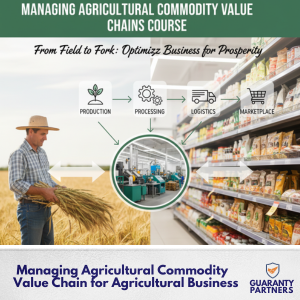
Introduction to Agricultural Commodity Value Chains
• Definition and importance of value chains in agriculture.
• Key components of the agricultural commodity value chain (production, processing, distribution, retail).
• Overview of the value chain in various agricultural commodities (crops, livestock, fisheries).
• Understanding market dynamics and demand-supply relationships.
Managing the Production Stage of the Value Chain
• Key practices in crop and livestock production for commodity value chains.
• Importance of input management (seeds, fertilizers, equipment).
• Farm management strategies for improving productivity.
• Role of technology and innovation in production.
• Addressing challenges in the production stage (climate change, pests, diseases).
Processing and Value Addition
• Importance of post-harvest handling and processing in the value chain.
• Types of processing methods for different agricultural commodities.
• Strategies for improving quality and adding value to raw agricultural products.
• Marketing processed goods and understanding consumer preferences.
• The role of standards, certifications, and regulations in processing.
Supply Chain Management and Stakeholder Collaboration
• Overview of supply chain management in agricultural business.
• Identifying key stakeholders in the agricultural value chain (farmers, processors, distributors, retailers, consumers).
• Strategies for improving collaboration and communication across the value chain.
• Risk management in the agricultural supply chain.
• Leveraging partnerships for efficient distribution and logistics.