By the end of this course, participants will be able to:
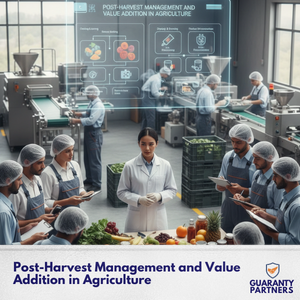
• Understand the principles and practices of post-harvest management for reducing losses.
• Identify critical factors affecting post-harvest quality and techniques to preserve freshness and nutritional value.
• Learn value addition techniques to enhance the marketability and profitability of agricultural produce.
• Gain knowledge of modern technologies and innovations in post-harvest handling and processing.
• Develop skills to design and implement sustainable post-harvest management systems.
Introduction to Post-Harvest Management
• Importance of post-harvest management in agriculture.
• Overview of global and local post-harvest losses.
• Key factors influencing post-harvest quality and shelf life.
Harvesting Techniques and Maturity Indices
• Proper harvesting techniques for different crops.
• Maturity indices for optimal harvesting.
• Tools and technologies for effective harvesting.
Post-Harvest Handling and Storage
• Principles of post-harvest handling.
• Sorting, grading, and packaging techniques.
• Storage systems: traditional and modern approaches.
• Maintaining quality during transportation and distribution.
Value Addition in Agriculture
• Overview of value addition and its significance.
• Processing techniques for fruits, vegetables, grains, and other crops.
• Developing new products from raw agricultural produce.
• Branding, labeling, and marketing value-added products.
Modern Technologies in Post-Harvest Management
• Cold chain management and refrigerated transport.
• Use of AI, IoT, and blockchain in post-harvest logistics.
• Advances in packaging technology: modified atmosphere packaging, vacuum packaging, etc.
Quality Standards and Safety in Post-Harvest Management
• Food safety and hygiene practices.
• Adherence to international quality standards and certifications.
• Traceability and compliance in value-added agricultural products.
Economic and Environmental Considerations
• Cost-benefit analysis of post-harvest management systems.
• Environmental impact and sustainability in post-harvest activities.
• Reducing food waste through efficient post-harvest practices.
The training methodology integrates lectures, interactive discussions, collaborative group exercises, and illustrative examples. Participants will acquire a blend of theoretical insights and hands-on practical experience, emphasizing the application of learned techniques. This approach ensures that attendees return to their professional environments equipped with both the competence and self-assurance to effectively implement the acquired skills in their responsibilities.