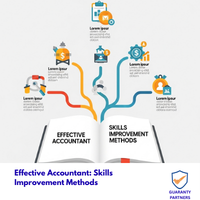
Effective Accountant: Skills Improvement Methods
Course Overview
Understanding and interpreting financial information is essential for all levels of personnel both within and outside the finance function, if they are to properly contribute to the success of the business. In this workshop, you will learn how to be more confident about dealing with financial information, particularly when reviewing other companies’ financial data and enhance their decision-making skills in financial matters.
Training Format:In-class, Virtual, In-house
Location:Lagos, Accra, Nairobi, Kigali
Language:English, French
Nigeria Price:
₦300000
Int'l., (Nigeria) Price:
$1000
Ghana Price:
$4000
Kenya Price:
$5500
Rwanda Price:
$6000
Nigeria Price:₦300000
Int'l., (Nigeria) Price:
$1000
Ghana Price:
$4000
Kenya Price:
$4000
Rwanda Price:
$4000
Nigeria Price: ₦300000
Int'l., (Nigeria) Price:
$1000
Ghana Price: $4000
Kenya Price: $4000
Rwanda Price: $4000
*Understanding Different Types of Financial Information
· Basis Accounting Terminology Explained
· The Flow of Accounting/Financial Information
· Distinguishing Different Types of Information and what is derived from
· Reporting formats
*Cash Cycle
· Cash versus Profit
· Basic Cash flow Statements
· Collection and Payment Processes
· How this is managed and controlled
*Inventory and Fixed Assets
·Asset lives and depreciation
· The Physical Verification of Assets
· Different Methods of Valuation
· How fixed assets are recorded
*Financial Statements
· The Balance Sheet Explained
· Using Financial Ratios
· Profit and Loss Account
· Computing Profitability Ratio
· Interpreting Results and Comparisons
*Costing and Budgeting
. Basic Forecasting Techniques
. Preparing a Departmental Budget
· Comparing Actual Performance with the Budget
· Different Costing Methods used in Business
FOR WHOM:
Accountants, Auditors, Controllers, Managers, Senior, Financial Analysts, other Financial Professionals and others who perform related functions in Public and Private Sectors.

1ST BATCH: Tuesday, April 14, 2026 — Friday, April 17, 2026.
2ND BATCH: Tuesday, August 4, 2026 — Friday, August 7, 2026.
3RD BATCH: Tuesday, December 1, 2026 — Friday, December 4, 2026.
The training methodology integrates lectures, interactive discussions, collaborative group exercises, and
illustrative examples. Participants will acquire a blend of theoretical insights and hands-on practical
experience, emphasizing the application of learned techniques. This approach ensures that attendees return
to their professional environments equipped with both the competence and self-assurance to effectively
implement the acquired skills in their responsibilities.