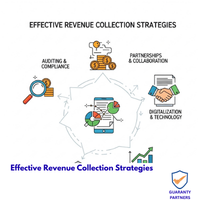
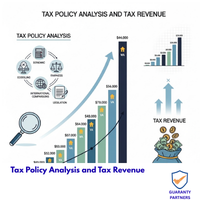
On successful completion of Effective Revenue Collection Strategies Course, participants shall be able to:
• Know the relevant changes in the new revenue collection guidance
• Familiarize the technical aspects of the principal steps of revenue collection in the new standards
• Learn the implications of “rules-based” and “principles-based” revenue collection standards
Introduction
• Introduction to revenue collection
• Need to maximize tax revenue
• OECD Guidelines
• Fiscal Policy
• Revenue collection in relation to GDP
• Ratio of GDP to tax – some statistics
• Develop/ developing countries
• Confidence in Government
• Government Spending
• Federal v/s State Tax
Types of Revenue
• Income Tax
• Corporate Tax
• VAT / Sales Tax
• Custom Duty
• Excise Duty
• Others
Increasing the Tax Base
• Mandatory Registration for VAT/ Sales Tax
• Encouragement of Self-Assessment
• Fair & efficient refund system
• Effective communication with taxpayers
• Simplify Taxation system
Other Indirect Methods
• Linking Tax Payments with other transactions
• Use of Internet/ Mobile
• Matching Sales Tax with Sales/ Purchases
• Introduction of Turnover / Fixed Taxation
Budget
• Budget Formulation
• Stakeholders in budget exercise
• Budget implementation
Role of Federal Tax Authority
• Reforms in Taxation system
• Minimize Exemptions
• Large Taxpayer unit
• Introduction of Advance Tax
• Closing loopholes
• Minimize corruption
• Efficient M.I.S. System
• Performance Analysis
• Accurate / Timely Information
Governance in Tax Departments
• Improved Governance
• Composition of Efficient Board of Directors/ Governance
• Inducting Independent Directors / Professionals
• Consequences of bad governance
Importance of Internal checks
• Necessity of Internal controls
• Effective Internal Checks
• Efficient Audit system
• Role of Internal Auditor
The training methodology integrates lectures, interactive discussions, collaborative group exercises, and illustrative examples. Participants will acquire a blend of theoretical insights and hands-on practical experience, emphasizing the application of learned techniques. This approach ensures that attendees return to their professional environments equipped with both the competence and self-assurance to effectively implement the acquired skills in their responsibilities.