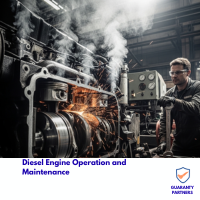
To provide participants with a comprehensive understanding of diesel engine operation and maintenance as used in heavy duty equipment. The course covers engine components, operating principles, routine servicing, troubleshooting, and safety practices to ensure efficient, reliable, and long-lasting engine performance in construction, mining, and industrial applications.
Importance of diesel engines in heavy equipment operations ● Common applications in construction, mining, and transport machinery ● Overview of diesel engine types and classifications ● Roles and responsibilities of operators and maintenance personnel
Diesel Engine Components and Functions
Major engine parts: cylinders, pistons, crankshaft, valves, and injectors ● Fuel systems and injection mechanisms ● Cooling, lubrication, and air intake systems ● Exhaust and emission control systems
Engine Operation Principles
Four-stroke and two-stroke engine cycles ● Combustion process and power generation ● Engine start-up, idling, and shutdown procedures ● Understanding engine performance indicators (temperature, oil pressure, RPM)
Routine Maintenance Practices
Checking and changing engine oil and filters ● Inspecting and cleaning air filters, fuel filters, and injectors ● Cooling system checks: radiators, hoses, and coolant levels ● Belt, hose, and gasket inspections
Troubleshooting and Fault Diagnosis
Identifying common engine problems (overheating, low power, unusual noises) ● Basic diagnostic techniques and tools ● Reporting faults and coordinating with technical maintenance teams ● Preventing major breakdowns through early detection
Safety and Compliance
Safe handling of fuels, lubricants, and engine fluids ● Use of personal protective equipment (PPE) ● Adherence to manufacturer guidelines and regulatory standards
The training methodology integrates lectures, interactive discussions, collaborative group exercises, and illustrative examples. Participants will acquire a blend of theoretical insights and hands-on practical experience, emphasizing the application of learned techniques. This approach ensures that attendees return to their professional environments equipped with both the competence and self-assurance to effectively implement the acquired skills in their responsibilities.