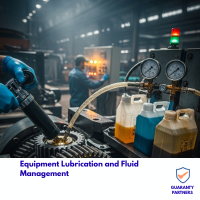
To provide participants with essential knowledge and practical skills for proper lubrication and fluid management in heavy duty equipment. The course covers types of lubricants and fluids, application methods, maintenance practices, and safety procedures to ensure efficient operation, reduce wear and tear, and prolong the lifespan of machinery in construction, mining, and industrial environments.
Importance of proper lubrication in heavy equipment operation ● Overview of different types of fluids: hydraulic oil, engine oil, gear oil, coolant, and fuel ● Roles and responsibilities of operators and maintenance personnel ● Effects of improper lubrication or fluid management on equipment performance
Lubrication Systems and Practices
Types of lubrication systems: manual, centralized, automatic ● Lubrication points on common heavy equipment (pins, bearings, gears, joints) ● Recommended lubrication schedules and intervals ● Techniques for applying grease and oil efficiently
Fluid Management Procedures
Checking and maintaining fluid levels (hydraulic, coolant, engine, transmission) ● Fluid sampling and quality monitoring ● Identifying contamination, leaks, and fluid degradation ● Proper storage and handling of fluids
The training methodology integrates lectures, interactive discussions, collaborative group exercises, and illustrative examples. Participants will acquire a blend of theoretical insights and hands-on practical experience, emphasizing the application of learned techniques. This approach ensures that attendees return to their professional environments equipped with both the competence and self-assurance to effectively implement the acquired skills in their responsibilities.