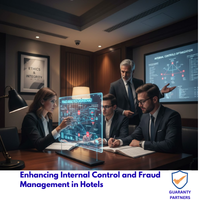
Enhancing Internal Control and Fraud Management in Hotels
Course Overview
• Understand the principles and importance of internal control in hotel management
• Learn best practices for establishing robust internal control systems in hotels
• Develop strategies to detect and prevent fraud within hotel operations
• Gain insights into risk management and mitigation techniques
• Enhance skills in auditing and compliance for hotel management
• Explore case studies of internal control failures and successful fraud prevention
• Understand the role of technology in strengthening internal controls and fraud management
Training Format:In-class, Virtual, In-house
Location:Lagos, Accra, Nairobi, Kigali
Language:English, French
Nigeria Price:
₦300000
Int'l., (Nigeria) Price:
$1000
Ghana Price:
$4000
Kenya Price:
$5500
Rwanda Price:
$6000
Nigeria Price:₦300000
Int'l., (Nigeria) Price:
$1000
Ghana Price:
$4000
Kenya Price:
$4000
Rwanda Price:
$4000
Nigeria Price: ₦300000
Int'l., (Nigeria) Price:
$1000
Ghana Price: $4000
Kenya Price: $4000
Rwanda Price: $4000
Introduction to Internal Control in Hotels
• Overview of internal control concepts and frameworks
• Importance of internal control in hotel management
• Key components of an effective internal control system
Establishing Internal Control Systems
• Designing and implementing internal controls tailored to hotel operations
• Roles and responsibilities in maintaining internal controls
• Documentation and reporting of internal control procedures
Fraud Detection and Prevention
• Common types of fraud in the hotel industry
• Techniques for detecting fraudulent activities
• Preventive measures to reduce fraud risk
Risk Management in Hotels
• Identifying and assessing risks in hotel operations
• Risk management strategies and practices
• Developing a risk-aware culture in hotels
Auditing and Compliance
• Principles of auditing in the hotel industry
• Conducting internal audits to evaluate controls
• Ensuring compliance with industry regulations and standards
Case Studies and Real-World Examples
• Analysis of internal control failures in hotels
• Lessons learned from successful fraud prevention cases
• Best practices derived from industry examples
Role of Technology in Internal Control and Fraud Management
• Leveraging technology for enhanced internal controls
• Implementing automated fraud detection tools
• Utilizing data analytics to monitor and prevent fraud
Continuous Improvement in Internal Control Systems
• Evaluating the effectiveness of internal controls
• Continuous monitoring and improvement strategies
• Training and development for staff on internal control and fraud awareness
Creating a Culture of Integrity and Ethics
• Promoting ethical behavior in hotel operations
• Establishing a code of conduct and ethical guidelines
• Encouraging transparency and accountability among staff
FOR WHOM:
Revenue Auditors, Chief Accountant, Finance Managers, Operations managers, Small Hotel Owners and those who undertakes internal auditing of a hotel.
1ST BATCH: Tuesday, March 3, 2026 — Friday, March 6, 2026.
2ND BATCH: Tuesday, July 7, 2026 — Friday, July 10, 2026.
3RD BATCH: Tuesday, November 3, 2026 — Friday, November 6, 2026.
The training methodology integrates lectures, interactive discussions, collaborative group exercises, and
illustrative examples. Participants will acquire a blend of theoretical insights and hands-on practical
experience, emphasizing the application of learned techniques. This approach ensures that attendees return
to their professional environments equipped with both the competence and self-assurance to effectively
implement the acquired skills in their responsibilities.