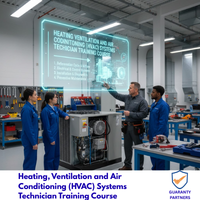
• detailed information and knowledge of HVAC systems, including their installation, operation, inspection, maintenance and repair
• experience and knowledge to inspect HVAC systems to check for issues or gaps and ensure functioning at optimal efficiencies
• the confidence and exposure to handle malfunctions and troubleshooting situations without letting these impact the environment or people
• the required understanding and awareness of expected standards of safety as well as environmental conservation to ensure that all operations are within these standards and benchmarks
• the skill and ability to foresee a challenge or issue in the functioning of HVAC systems and undertake early measures to minimise damage or prevent inconvenience
• the adequate knowledge and experience to work with HVAC systems to ensure optimal levels of operation, maintenance, reduced wear and tear, in turn increasing life or longevity
• the confidence and knowledge to help groom other professionals to work with HVAC systems within the expected standards of quality and safety
• the ability to contribute to reducing costs and eventually contributing to organisational growth and development
Overview of HVAC Systems
• Definition
• Heating
o Generation
o Distribution
o Dangers
• Ventilation
o Mechanical or forced ventilation
o Natural ventilation
• Air conditioning
o Refrigeration cycle
o Free cooling
o Dehumidification
Types of HVAC Systems
• Split systems
• Hybrid systems
• Duct-free systems
• Packaged heating and air systems
Components of an HVAC System
• Heat exchanger
• Blower motor
• Combustion chamber
• Condenser coil or compressor
• Evaporator coil
• Thermostat
Benefits of Installing HVAC Systems
• Lower electricity bills
• Better temperature variability
• Cleaner air
• Remote access
Symptoms of HVAC System Issues
• Odours or poor indoor air quality
• Strange, unfamiliar sounds
• Inconsistent airflow/uneven heating and cooling
• Loss of system efficiency
• Unexpected rise in heating and cooling costs
Causes of HVAC System Issues
• Lack of maintenance
• Dirty or clogged filters
• Leaking refrigerant
• Thermostat malfunctions
• Improvement air balance
• Sluggish fan
• Dirty coils
• Outdated design
Aspects of Energy Efficiency
• Heating energy
• Ground source heat pump
• Ventilation energy recovery
• Air conditioning energy
Maintenance Checklist for HVAC Systems
• Cleaning or replacement of filters
• Cleaning of evaporator and condenser coils
• Cleaning of drain lines
• Clearing of drain pans
• Replacement of worn pulleys and belts
• Inspection of ducts for moulds, dust, debris
• Observation of humidity levels
The training methodology integrates lectures, interactive discussions, collaborative group exercises, and illustrative examples. Participants will acquire a blend of theoretical insights and hands-on practical experience, emphasizing the application of learned techniques. This approach ensures that attendees return to their professional environments equipped with both the competence and self-assurance to effectively implement the acquired skills in their responsibilities.