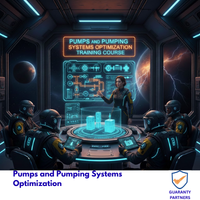
Pumps and Pumping Systems Optimization
Course Overview
- Enhance understanding of pump selection and performance optimization.
- Explore energy efficiency in pumping systems.
- Improve skills in troubleshooting and maintenance of pumps.
- Learn advanced techniques for monitoring and control of pumping systems.
Training Format:In-class, Virtual, In-house
Location:Lagos, Accra, Nairobi, Kigali
Language:English, French
Nigeria Price:
₦350000
Int'l., (Nigeria) Price:
$1000
Ghana Price:
$4000
Kenya Price:
$5500
Rwanda Price:
$6000
Nigeria Price:₦350000
Int'l., (Nigeria) Price:
$1000
Ghana Price:
$4000
Kenya Price:
$4000
Rwanda Price:
$4000
Nigeria Price: ₦350000
Int'l., (Nigeria) Price:
$1000
Ghana Price: $4000
Kenya Price: $4000
Rwanda Price: $4000
Pump Selection and Performance Optimization
- Types of pumps and their applications
- Factors affecting pump performance
- Matching pumps to system requirements
- Calculating and optimizing pump efficiency
Energy Efficiency in Pumping Systems
- Principles of energy-efficient pump operation
- Identifying energy-saving opportunities
- Retrofitting for efficiency improvements
- Impact of variable frequency drives (VFDs)
Troubleshooting and Maintenance of Pumps
- Common pump problems and their solutions
- Preventive maintenance strategies
- Inspection and diagnostics techniques
- Spare parts management and replacement planning
Advanced Monitoring and Control Techniques
- Automation in pumping systems
- Integration of IoT for real-time monitoring
- Data analysis for performance optimization
1ST BATCH: Tuesday, April 21, 2026 — Friday, April 24, 2026.
2ND BATCH: Tuesday, August 11, 2026 — Friday, August 14, 2026.
3RD BATCH: Tuesday, December 8, 2026 — Friday, December 11, 2026.
The training methodology integrates lectures, interactive discussions, collaborative group exercises, and
illustrative examples. Participants will acquire a blend of theoretical insights and hands-on practical
experience, emphasizing the application of learned techniques. This approach ensures that attendees return
to their professional environments equipped with both the competence and self-assurance to effectively
implement the acquired skills in their responsibilities.