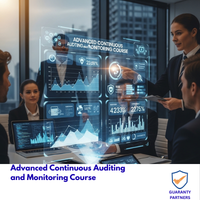
Advanced Continuous Auditing and Monitoring Course
Course Overview
Training on how to apply continuous auditing and monitoring approach to the appropriate transaction flows and other internal audit assignments. This internal audit approach provides more timely and ongoing assurance concerning detailed controls operations. This workshop focuses on identifying what must be done to make effective use of information technology in support of continuous auditing.
Training Format:In-class, Virtual, In-house
Location:Lagos, Accra, Nairobi, Kigali
Language:English, French
Nigeria Price:
₦380000
Int'l., (Nigeria) Price:
$1000
Ghana Price:
$5000
Kenya Price:
$6500
Rwanda Price:
$7000
Nigeria Price:₦380000
Int'l., (Nigeria) Price:
$1000
Ghana Price:
$5000
Kenya Price:
$5000
Rwanda Price:
$5000
Nigeria Price: ₦380000
Int'l., (Nigeria) Price:
$1000
Ghana Price: $5000
Kenya Price: $5000
Rwanda Price: $5000
Introduction and Background
- An Integrated Audit Approach
- Trends in the Internal Audit Industry
- What is Continuous Auditing (CA)?
- What is Continuous Monitoring (CM)?
- What is Continuous Assurance?
- What are the Pros and Cons?
- Is Continuous Auditing an Attainable Goal?
- Elimination of Audit Waste
Hurdles to Implementing Continuous Auditing Steps to Implementing a Continuous Audit
- Identifying High Risk Areas
- Setting Monitoring & Continuous Audit Rules
- Process Frequency
- Configuring Audit Parameters
- Communication of Results
- Challenges and Other Considerations
How does CA/CM Support Audit?
- Development of Audit Plan
- Applications for Continuous Control Assessment
- Applications for Continuous Risk Assessment
- Decrease in Testing Phases
FOR WHOM:
All Internal Auditors and Other Managers/Officials who perform related functions in the both the Public and Private Sectors.
1ST BATCH: Tuesday, April 20, 2027 — Friday, April 23, 2027.
2ND BATCH: Tuesday, August 10, 2027 — Friday, August 13, 2027.
3RD BATCH: Tuesday, November 30, 2027 — Friday, December 3, 2027.
The training methodology integrates lectures, interactive discussions, collaborative group exercises, and
illustrative examples. Participants will acquire a blend of theoretical insights and hands-on practical
experience, emphasizing the application of learned techniques. This approach ensures that attendees return
to their professional environments equipped with both the competence and self-assurance to effectively
implement the acquired skills in their responsibilities.