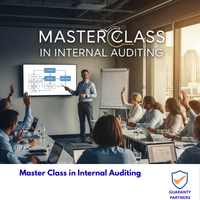
Master Class in Internal Auditing
Course Overview
All auditors have moments when they are working on a problem, trying to determine the best course of action in a given circumstance and they wonder how their colleagues handle similar situations. This workshop will use best practice to help participants transform their audit departments, create a desired culture, market their valuable capabilities and measure the results.
Training Format:In-class, Virtual, In-house
Location:Lagos, Accra, Nairobi, Kigali
Language:English, French
Nigeria Price:
₦300000
Int'l., (Nigeria) Price:
$1000
Ghana Price:
$4000
Kenya Price:
$5500
Rwanda Price:
$6000
Nigeria Price:₦300000
Int'l., (Nigeria) Price:
$1000
Ghana Price:
$4000
Kenya Price:
$4000
Rwanda Price:
$4000
Nigeria Price: ₦300000
Int'l., (Nigeria) Price:
$1000
Ghana Price: $4000
Kenya Price: $4000
Rwanda Price: $4000
Audit Planning
– Audit planning process
– Planning the audit approach
– Assess preliminary scope area
Interviewing
– Planning and conducting interviews
– Observation
Process Documentation
– Basic narrative and a flowchart
– Create a narrative or flowchart
– Advantages and disadvantages
Audit Program
– Developing and using of audit program
– Controls preventive or detective
– Testing objectives
– Tailoring audit program
Reporting
– Audit Reports
– Components of an audit report
– Determining the readers of audit reports
– Quality of an audit opinion
Team work
– Essentials of teamwork to audit project
– Various teamwork related factors
Testing
– Methodologies used to gather audit evidence
– Sampling and testing approaches
– Components of an audit work paper
– Draft an audit work paper
FOR WHOM: All Internal and External Auditors, Middle and Senior Managers, Forensic Accountants, Financial Investigators and others who perform related functions in the Public and Private Sectors.

1ST BATCH: Tuesday, March 3, 2026 — Friday, March 6, 2026.
2ND BATCH: Tuesday, June 23, 2026 — Friday, June 26, 2026.
3RD BATCH: Tuesday, October 20, 2026 — Friday, October 23, 2026.
The training methodology integrates lectures, interactive discussions, collaborative group exercises, and
illustrative examples. Participants will acquire a blend of theoretical insights and hands-on practical
experience, emphasizing the application of learned techniques. This approach ensures that attendees return
to their professional environments equipped with both the competence and self-assurance to effectively
implement the acquired skills in their responsibilities.