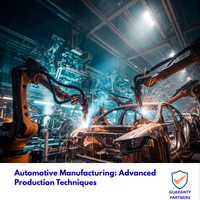
Automotive Manufacturing: Advanced Production Techniques
Course Overview
- Understand advanced production techniques used in modern automotive manufacturing.
- Learn how to optimize production processes, enhance quality, and improve operational efficiency.
- Explore automation, lean manufacturing, and quality control systems in automotive production.
- Gain practical knowledge to implement best practices, reduce waste, and maintain high standards in vehicle manufacturing.
Training Format:In-class, Virtual, In-house
Location:Lagos, Accra, Nairobi, Kigali
Language:English, French
Nigeria Price:
₦350000
Int'l., (Nigeria) Price:
$1000
Ghana Price:
$4000
Kenya Price:
$5500
Rwanda Price:
$6000
Nigeria Price:₦350000
Int'l., (Nigeria) Price:
$1000
Ghana Price:
$4000
Kenya Price:
$4000
Rwanda Price:
$4000
Nigeria Price: ₦350000
Int'l., (Nigeria) Price:
$1000
Ghana Price: $4000
Kenya Price: $4000
Rwanda Price: $4000
Introduction to Automotive Manufacturing
- Overview of Automotive Production: Assembly lines, component manufacturing, and vehicle systems.
- Industry Trends: Global and local automotive manufacturing developments.
- Key Stakeholders: Engineers, production managers, quality controllers, and suppliers.
Advanced Production Techniques
- Lean Manufacturing: Eliminating waste and improving process efficiency.
- Just-in-Time (JIT) Production: Reducing inventory costs and streamlining operations.
- Flexible Manufacturing Systems: Adapting production to changing demand.
Automation and Robotics
- Role of Automation: Assembly lines, robotic arms, and automated inspection.
- Integration of Robotics: Benefits for precision, speed, and safety.
- Human-Machine Collaboration: Optimizing efficiency while ensuring safety.
Quality Control and Assurance
- Quality Management Systems: ISO/TS 16949 and automotive standards.
- Inspection Techniques: In-process checks, end-of-line testing, and defect analysis.
- Continuous Improvement: Kaizen, Six Sigma, and process optimization.
Supply Chain and Materials Management
- Just-in-Time Supply: Coordinating suppliers and production schedules.
- Material Handling and Inventory Control: Reducing costs and minimizing disruptions.
- Vendor Management: Ensuring quality and reliability of components.
Health, Safety, and Environmental Compliance
- Workplace Safety: Ergonomics, machinery safety, and hazard control.
- Environmental Compliance: Waste reduction, emissions control, and sustainability practices.
- Regulatory Standards: Local and international automotive safety regulations.
1ST BATCH: Monday, March 30, 2026 — Thursday, April 2, 2026.
2ND BATCH: Tuesday, July 21, 2026 — Friday, July 24, 2026.
3RD BATCH: Tuesday, December 8, 2026 — Friday, December 11, 2026.
The training methodology integrates lectures, interactive discussions, collaborative group exercises, and
illustrative examples. Participants will acquire a blend of theoretical insights and hands-on practical
experience, emphasizing the application of learned techniques. This approach ensures that attendees return
to their professional environments equipped with both the competence and self-assurance to effectively
implement the acquired skills in their responsibilities.

Facebook
WhatsApp
X
Threads
Telegram
Print