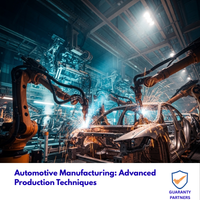
Automotive Manufacturing: Advanced Production Techniques
Course Overview
- Understand advanced production techniques in automotive manufacturing.
- Explore cutting-edge technologies used in automotive production.
- Analyze the impact of automation and robotics in automotive manufacturing.
- Learn best practices for optimizing production efficiency and quality control.
Training Format:In-class, Virtual, In-house
Location:Lagos, Accra, Nairobi, Kigali
Language:English, French
Nigeria Price:
₦350000
Int'l., (Nigeria) Price:
$1000
Ghana Price:
$4000
Kenya Price:
$5500
Rwanda Price:
$6000
Nigeria Price:₦350000
Int'l., (Nigeria) Price:
$1000
Ghana Price:
$4000
Kenya Price:
$4000
Rwanda Price:
$4000
Nigeria Price: ₦350000
Int'l., (Nigeria) Price:
$1000
Ghana Price: $4000
Kenya Price: $4000
Rwanda Price: $4000
Introduction to Automotive Manufacturing Technologies
- Overview of automotive manufacturing process.
- Role of advanced production techniques in the automotive industry.
- Evolution of automotive manufacturing technologies.
- Key technological advancements in automotive production.
Automation and Robotics in Automotive Manufacturing
- Types of automation used in automotive manufacturing.
- Role of robotics in assembly lines.
- Benefits of automation in production efficiency and cost reduction.
- Challenges and considerations in implementing automation.
Advanced Manufacturing Techniques and Materials
- Use of lightweight materials in automotive production.
- Advanced welding and joining techniques.
- Additive manufacturing (3D printing) in automotive production.
- Innovations in painting and coating processes.
Production Optimization and Quality Control
- Lean manufacturing principles in automotive production.
- Implementing Six Sigma for quality improvement.
- Monitoring and controlling production processes for efficiency.
1ST BATCH: Monday, March 30, 2026 — Thursday, April 2, 2026.
2ND BATCH: Tuesday, July 21, 2026 — Friday, July 24, 2026.
3RD BATCH: Tuesday, December 8, 2026 — Friday, December 11, 2026.
The training methodology integrates lectures, interactive discussions, collaborative group exercises, and
illustrative examples. Participants will acquire a blend of theoretical insights and hands-on practical
experience, emphasizing the application of learned techniques. This approach ensures that attendees return
to their professional environments equipped with both the competence and self-assurance to effectively
implement the acquired skills in their responsibilities.