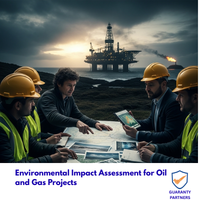
Environmental Impact Assessment for Oil and Gas Projects

Course Overview

  • Understand the principles and importance of Environmental Impact Assessment (EIA) in oil and gas projects.
  • Learn the process and methodologies used in conducting EIAs.
  • Analyze environmental risks and impacts associated with oil and gas operations.
  • Explore mitigation strategies and the regulatory frameworks guiding EIA.

Training Format:In-class, Virtual, In-house

Location:Lagos, Accra, Nairobi, Kigali

Language:English, French

Nigeria Price:
₦360000

Int'l., (Nigeria) Price:
$1000

Ghana Price:
$4000

Kenya Price:
$5500

Rwanda Price:
$6000

Nigeria Price:₦360000

Int'l., (Nigeria) Price:
$1000

Ghana Price:
$4000

Kenya Price:
$4000

Rwanda Price:
$4000

Nigeria Price: ₦360000

Int'l., (Nigeria) Price:
$1000

Ghana Price: $4000

Kenya Price: $4000

Rwanda Price: $4000

Introduction to Environmental Impact Assessment (EIA)

  • Definition and purpose of EIA
  • The role of EIA in oil and gas projects
  • Key concepts in environmental sustainability
  • The global and local importance of EIA in the oil and gas industry

EIA Process and Methodology

  • Steps involved in conducting an EIA
  • Screening, scoping, and baseline data collection
  • Environmental risk assessment techniques
  • Tools and methodologies for impact prediction and evaluation
  • Stakeholder engagement and public participation

Environmental Impacts in Oil and Gas Projects

  • Common environmental impacts of oil and gas exploration and extraction
  • Effects on air, water, soil, and biodiversity
  • Environmental degradation caused by oil spills, gas flaring, and waste disposal
  • Case studies of major oil and gas project impacts

Mitigation and Regulatory Framework

  • Strategies for mitigating environmental impacts
  • Environmental management plans and monitoring
  • Legal and regulatory frameworks guiding EIA in the oil and gas industry

1ST BATCH: Tuesday, March 3, 2026 — Friday, March 6, 2026.

2ND BATCH: Tuesday, July 7, 2026 — Friday, July 10, 2026.

3RD BATCH: Tuesday, November 3, 2026 — Friday, November 6, 2026.

The training methodology integrates lectures, interactive discussions, collaborative group exercises, and
illustrative examples. Participants will acquire a blend of theoretical insights and hands-on practical
experience, emphasizing the application of learned techniques. This approach ensures that attendees return
to their professional environments equipped with both the competence and self-assurance to effectively
implement the acquired skills in their responsibilities.

Facebook
WhatsApp
X
Threads
Telegram
Print