
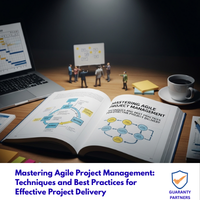
Mastering Agile Project Management: Techniques and Best Practices for Effective Project Delivery
Course Overview
• Understand the principles and practices of Agile project management.
• Develop skills to effectively plan, execute, and deliver Agile projects.
• Learn how to implement Agile methodologies in various project environments.
• Enhance team collaboration and communication through Agile practices.
• Gain insights into Agile tools and techniques for efficient project management.
• Foster a culture of continuous improvement and adaptability in project teams.
Training Format:In-class, Virtual, In-house
Location:Lagos, Accra, Nairobi, Kigali
Language:English, French
Nigeria Price:
₦330000
Int'l., (Nigeria) Price:
$1000
Ghana Price:
$4000
Kenya Price:
$5500
Rwanda Price:
$6000
Nigeria Price:₦330000
Int'l., (Nigeria) Price:
$1000
Ghana Price:
$4000
Kenya Price:
$4000
Rwanda Price:
$4000
Nigeria Price: ₦330000
Int'l., (Nigeria) Price:
$1000
Ghana Price: $4000
Kenya Price: $4000
Rwanda Price: $4000
Introduction to Agile Project Management
• Overview of Agile methodologies and principles
• Benefits of adopting Agile practices in project management
• Differences between Agile and traditional project management approaches
Agile Frameworks and Methodologies
• Scrum framework and its key components
• Kanban methodology and workflow visualization
• Other Agile frameworks: Lean, XP, and Crystal
Agile Project Planning and Initiation
• Setting project goals and defining scope
• Creating a project roadmap and release plan
• Establishing Agile roles and responsibilities
Agile Project Execution and Delivery
• Conducting effective sprint planning and daily stand-ups
• Managing sprint reviews and retrospectives
• Techniques for backlog grooming and prioritization
Agile Tools and Techniques
• Utilizing Agile project management tools (e.g., Jira, Trello, Asana)
• Implementing user stories, story points, and velocity tracking
• Best practices for continuous integration and continuous delivery (CI/CD)
Team Collaboration and Communication
• Building cross-functional teams and fostering collaboration
• Techniques for effective communication and stakeholder engagement
• Addressing challenges in remote and distributed Agile teams
Agile Metrics and Performance Measurement
• Tracking and measuring Agile project performance
• Key metrics: burndown charts, cumulative flow diagrams, and cycle time
• Using metrics to drive continuous improvement
Scaling Agile for Large Projects
• Strategies for scaling Agile methodologies in large organizations
• Frameworks for scaling Agile: SAFe, LeSS, and Disciplined Agile
• Managing dependencies and coordination across multiple teams
Agile Risk Management
• Identifying and mitigating risks in Agile projects
• Techniques for adaptive planning and risk response
• Incorporating risk management into Agile practices
Continuous Improvement and Adaptability
• Fostering a culture of continuous learning and improvement
• Techniques for incorporating feedback and iterating on processes
• Adapting Agile practices to changing project requirements
Case Studies and Practical Applications
• Real-world examples of successful Agile projects
• Lessons learned and best practices from various industries
• Hands-on exercises and group activities to apply Agile concepts
1ST BATCH: Tuesday, January 13, 2026 — Friday, January 16, 2026.
2ND BATCH: Tuesday, May 5, 2026 — Friday, May 8, 2026.
3RD BATCH: Tuesday, September 1, 2026 — Friday, September 4, 2026.
The training methodology integrates lectures, interactive discussions, collaborative group exercises, and
illustrative examples. Participants will acquire a blend of theoretical insights and hands-on practical
experience, emphasizing the application of learned techniques. This approach ensures that attendees return
to their professional environments equipped with both the competence and self-assurance to effectively
implement the acquired skills in their responsibilities.