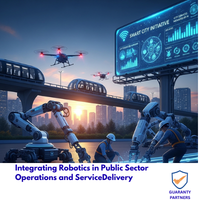
Introduction to Robotics in Public Sector
• Overview of robotics technologies: RPA, AI-enabled robots, and autonomous systems
• Benefits of robotics for efficiency, transparency, and service quality
• Challenges and risks associated with robotics adoption in government
• Case studies of successful robotics integration in public services
Robotics for Operational Efficiency
• Automating repetitive and administrative tasks
• Workflow optimization and error reduction using robotics
• Enhancing decision-making and resource allocation
• Monitoring and measuring performance improvements
Robotics in Service Delivery
• Enhancing citizen services through automation (e.g., payments, licensing, permits)
• Robotic process automation (RPA) for high-volume public interactions
• Integration with digital platforms for seamless service experiences
• Evaluating the impact on accessibility, speed, and customer satisfaction
Leadership and Change Management
• Preparing teams for robotics integration
• Managing resistance and fostering employee engagement
• Developing digital skills and capabilities among staff
• Aligning robotics initiatives with organizational goals
Governance, Ethics, and Compliance
• Regulatory and legal considerations for robotics adoption
• Ensuring ethical use of autonomous systems
• Data privacy, cybersecurity, and accountability frameworks
• Building trust with stakeholders and the public
Future Trends and Continuous Improvement
• Emerging robotics technologies and applications in government
• Strategic planning for sustainable robotics adoption
• Continuous monitoring, evaluation, and optimization
• Preparing for hybrid human-robot work environments