
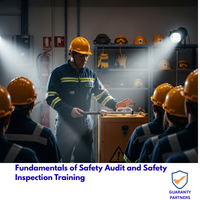
Fundamentals of Safety Audit and Safety Inspection Training
Course Overview
Upon completing this Safety Audit and Safety Inspection Certification Training Course successfully, participants will be able to:
• Recognise the purpose and benefits of safety inspections
• Study how to plan and execute an effective and beneficial safety inspection
• Practice how to use checklists to save time and improve inspection quality
• Classify and document potential and actual hazards related to facilities and equipment
• Detect and report any hazards which necessitate immediate consideration
• Determine whether existing hazard controls are functioning adequately and recommend corrective actions when necessary
• Understand how to communicate results
• Develop recommendations and follow-up on implementation plans
Training Format:In-class, Virtual, In-house
Location:Lagos, Accra, Nairobi, Kigali
Language:English, French
Nigeria Price:
₦3500000
Int'l., (Nigeria) Price:
$1000
Ghana Price:
$4000
Kenya Price:
$5500
Rwanda Price:
$6000
Nigeria Price:₦3500000
Int'l., (Nigeria) Price:
$1000
Ghana Price:
$4000
Kenya Price:
$4000
Rwanda Price:
$4000
Nigeria Price: ₦3500000
Int'l., (Nigeria) Price:
$1000
Ghana Price: $4000
Kenya Price: $4000
Rwanda Price: $4000
AUDITS, LEGISLATION, AND CONTRACTORS
• Introduction to Safety Audits and Inspections
• The legal aspects relating to monitoring performance
• ISO 45001
• Contractor Selection and Control
ELEMENTS OF A SAFETY MANAGEMENT SYSTEM
• Types of Safety Management Systems
• Core Elements of Safety Management Systems
• Proactive and Reactive Monitoring of Performance
• Measurement Techniques
• Competencies for Auditors
• Audits and their Critical Components
COMPONENTS INSPECTED IN A SAFETY MANAGEMENT SYSTEM
• Equipment
• Materials
• Processes
• Environment
INSPECTIONS
• Observation Techniques
• Physical Inspection of the Site
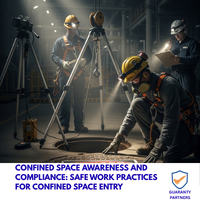
• Confined Space Entry
• Lifting equipment and lifting operations
• Work at height and safe access
• Chemicals
• Fire Assessment
• Permit to Work Systems
AUDITS
• The Audit Process
• Review Health and Safety Related Documentation
• Interview Selected Staff
• Tour the Facilities
• Observations and Recommendations Report
• Risk Identification & management
• Action Plan
SAFETY CULTURE
• Safety Culture and Human Factors
• Negative and Positive Dimensions
• Taylor, Herzberg, McGregor, and Maslow
• Natural Penalties and Consequences
• Antecedents, Behaviour, and Consequences (ABC) Analysis
• What drives behaviour?
• Auditing and improving the safety culture
ROLE OF THE SAFETY ADVISOR
• Examine Health and Safety Policies, Procedures, and Records
• Inspect the Workplace
• Interview Staff and Management
• Support Team Members
• Ensure Compliance with Legislation
• Advise on Safety Practices for Business Continuity
EMERGENCY AND CONTINGENCY PLANNING
• Internal Emergency Plans
• External Emergency Plans
• Auditing Emergency Plans
• Audit Reports
• Contingency Planning
• Actions for Improvement
SECRETS OF A SUCCESSFUL SAFETY PROGRAM
• Plan Your Safety Audit/Inspection Program
• Decide on a General or Specific Audit
• Decide Who Will Conduct the Audit
• Decide What You Should Inspect For
• Determine How Often You Should Inspect
• Set Priorities
• Inform Management
• Hazard Priority Classification System
• Develop Your Checklist
1ST BATCH: Monday, March 30, 2026 — Thursday, April 2, 2026.
2ND BATCH: Tuesday, July 28, 2026 — Friday, July 31, 2026.
3RD BATCH: Tuesday, November 17, 2026 — Friday, November 20, 2026.
The training methodology integrates lectures, interactive discussions, collaborative group exercises, and
illustrative examples. Participants will acquire a blend of theoretical insights and hands-on practical
experience, emphasizing the application of learned techniques. This approach ensures that attendees return
to their professional environments equipped with both the competence and self-assurance to effectively
implement the acquired skills in their responsibilities.