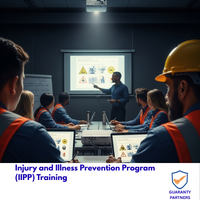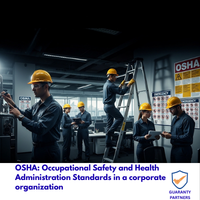
Health, Safety and Environment (HSE) Training Course for Ports & Oil and Gas Industry
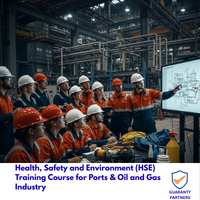
Course Overview
The main objective of this course is to empower marine professionals and oil company employees with—
• complete information about health and safety of employees and protection of the environment
• awareness of best practices to follow at work to cause minimum pollution to the environment
• knowledge of certain precautionary measures while working and handling machinery or other equipment to prevent occupational hazards
• the necessary information to handle cargo and waste material in a controlled manner so as to minimise negative impact to the environment
• the required skill and capability to devise, implement and manage safety and health management systems in the organisation
• the necessary knowledge and confidence to undertake training of new employees for protecting and safeguarding them and the organisations’ assets against hazards
• the required experience and information to implement advanced systems and technologies to ensure seamless maintenance of health, safety and environment quality
• the necessary information and skill to conduct regular internal audits for the organisation to ensure adherence to universal standards
• the adequate level of knowledge needed to progress in the organisation by undertaking critical roles in safety, health and environment awareness
Training Format:In-class, Virtual, In-house
Location:Lagos, Accra, Nairobi, Kigali
Language:English, French
Nigeria Price:
₦3500000
Int'l., (Nigeria) Price:
$1000
Ghana Price:
$4000
Kenya Price:
$5500
Rwanda Price:
$6000
Nigeria Price:₦3500000
Int'l., (Nigeria) Price:
$1000
Ghana Price:
$4000
Kenya Price:
$4000
Rwanda Price:
$4000
Nigeria Price: ₦3500000
Int'l., (Nigeria) Price:
$1000
Ghana Price: $4000
Kenya Price: $4000
Rwanda Price: $4000
Types of Oil Work Hazards
• Motor vehicle accidents
• Contact injuries
• Fires and explosions
• Biological hazards
• Ergonomic hazards
• Slips, trips and falls
• Chemical hazards
Port Work Hazards
• Fires and explosions
• Chemical hazards
• Weather conditions/tidal movements
• Physical exhaustion
• Slips, trips and falls
• Cargo transport accidents
Ship Hazards
• Fires and electric shocks
• Carbon dioxide poisoning
• Electronic device hazards
• Aluminium tool and paint hazards
• Wind and lightning
• Oxygen deficiency
• Spillage
Importance of Health and Safety Awareness and Training
• Reduced injury and illness
• Positive work culture
• Reduced environmental impact
• Legal standard adherence
• Increased employer branding
• Increased credibility
• Reduced risk of losses
Elements of a Safety Management System
• Strategic plan
• Policies and processes
• Training and induction
• Monitoring
• Supervision
• Reporting
Pillars of a Health and Safety Management System
• Management commitment
• Clear safety objectives
• Defined methods and processes
• Transparency in safety management
Essential Elements of a Health and Safety Management Programme
• Hazard recognition, evaluation and control
• Safety performance management
• Regulatory compliance management
• Information collection and dissemination
• Assessments and audits
Success Factors of Health, Safety and Environment Management
• Leadership mind-set and corporate commitment
• Investment in infrastructure and management systems
• Education and training
• Regulatory framework
• Technology
1ST BATCH: Tuesday, April 7, 2026 — Friday, April 10, 2026.
2ND BATCH: Tuesday, August 4, 2026 — Friday, August 7, 2026.
3RD BATCH: Tuesday, December 1, 2026 — Friday, December 4, 2026.
The training methodology integrates lectures, interactive discussions, collaborative group exercises, and
illustrative examples. Participants will acquire a blend of theoretical insights and hands-on practical
experience, emphasizing the application of learned techniques. This approach ensures that attendees return
to their professional environments equipped with both the competence and self-assurance to effectively
implement the acquired skills in their responsibilities.