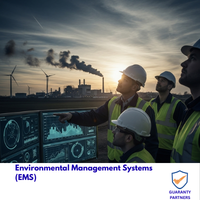
Environmental Management Systems (EMS)
Course Overview
By the end of this training course, participants will be able to:
• Understand types of environmental aspects and their environmental impacts
• Understand the requirements of newly revised ISO 14001:2018 standard
• Identify all waste stream types and opportunity unit for reducing costs of waste
• Understand environmental-management system definitions, ideas, and guidelines
• Understand the requirements of the ISO 14001:2018 standard
• Understand the Environmental Management System (EMS) implementation phases, learn best-practice techniques, examine useful tools, and understand the incorporation of the Environmental Management System (EMS) with other environmental programs
• Apply environmental-management principles to achieve continual Environmental Management System (EMS) improvement
Training Format:In-class, Virtual, In-house
Location:Lagos, Accra, Nairobi, Kigali
Language:English, French
Nigeria Price:
₦3500000
Int'l., (Nigeria) Price:
$1000
Ghana Price:
$4000
Kenya Price:
$5500
Rwanda Price:
$6000
Nigeria Price:₦3500000
Int'l., (Nigeria) Price:
$1000
Ghana Price:
$4000
Kenya Price:
$4000
Rwanda Price:
$4000
Nigeria Price: ₦3500000
Int'l., (Nigeria) Price:
$1000
Ghana Price: $4000
Kenya Price: $4000
Rwanda Price: $4000
Introduction to Environmental Management
• Benefits of Good Environmental Management
• Key Environmental Management System (EMS) Elements
• Document Framework for an Environmental Management System
• Environmental Management System as a Process (Plan / Do / Check / Act)
• ISO 14001:2018 Environmental Management System Benefits
• ISO 14001:2018 Requirements
• Understanding Organisation’s Activities and Interested Parties
Environmental Management Systems / Leadership and Planning
• Initial Environmental Review (IER)
• Developing and Communicating an Environmental Policy
• Assigning Organisational Roles, Responsibilities, and Authorities
• Determining Organisation’s Compliance Obligations
• Selecting Risk Control Measures for Managing Significant Impacts
• Setting Environmental Objectives and Programs to Achieve Them
Environmental Aspects & Impacts
• Identifying and Analysing Environmental Aspects and Impact Risks
• Understanding Environmental Impacts
• Understanding Global, Regional and Local Environmental Issues
• How to Determine Significant Environmental Aspects
• Analysis of Impacts
• Carrying out an EIA
• Identifying Applicable Regulatory and Standards’ Requirements
Support and Operations
• Awareness
• Communication
• Documented Information
• Operational Control
• Contractor & Supplier Controls
• Emergency Preparedness and Response
Performance Evaluation and Internal Environmental Auditing
• Carrying Out an Environmental Audit
• EMS Performance Monitoring, Measurement, Analysis and Evaluation
• Checking and Evaluation of Compliance Obligations
• Management Review Process
• Summary of Course Key Points and Assessment
1ST BATCH: Tuesday, January 13, 2026 — Friday, January 16, 2026.
2ND BATCH: Tuesday, May 5, 2026 — Friday, May 8, 2026.
3RD BATCH: Tuesday, September 1, 2026 — Friday, September 4, 2026.
The training methodology integrates lectures, interactive discussions, collaborative group exercises, and
illustrative examples. Participants will acquire a blend of theoretical insights and hands-on practical
experience, emphasizing the application of learned techniques. This approach ensures that attendees return
to their professional environments equipped with both the competence and self-assurance to effectively
implement the acquired skills in their responsibilities.