

Inventory Management and Stock Control
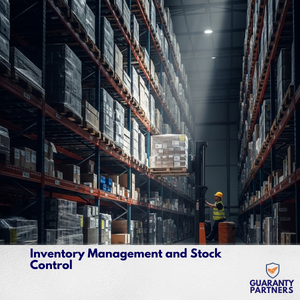
Course Overview
• Understand the importance of effective inventory management in business operations.
• Learn various methods and techniques for stock control and inventory management.
• Develop skills to optimize inventory levels to minimize costs while ensuring sufficient stock availability.
• Explore inventory management software and tools to streamline processes and enhance efficiency.
• Gain insights into inventory valuation methods and cost accounting principles.
• Learn about the role of forecasting and demand planning in inventory management.
• Understand the impact of inventory management on customer satisfaction and overall business performance.
Training Format:In-class, Virtual, In-house
Location:Lagos, Accra, Nairobi, Kigali
Language:English, French
Nigeria Price:
₦3000000
Int'l., (Nigeria) Price:
$1000
Ghana Price:
$4000
Kenya Price:
$5500
Rwanda Price:
$6000
Nigeria Price:₦3000000
Int'l., (Nigeria) Price:
$1000
Ghana Price:
$4000
Kenya Price:
$4000
Rwanda Price:
$4000
Nigeria Price: ₦3000000
Int'l., (Nigeria) Price:
$1000
Ghana Price: $4000
Kenya Price: $4000
Rwanda Price: $4000
Introduction to Inventory Management
• Importance of inventory management
• Types of inventory and their characteristics
• Key terminology and concepts in inventory management
• Overview of inventory costing methods
Stock Control Techniques
• Economic Order Quantity (EOQ) model
• Just-In-Time (JIT) inventory management
• ABC analysis and Pareto principle
• Reorder point (ROP) and safety stock
Inventory Management Systems
• Inventory management software and tools
• Barcode and RFID technology
• Cycle counting and physical inventory procedures
• Warehouse layout and organization
Inventory Valuation and Costing
• FIFO, LIFO, and weighted average costing methods
• Inventory valuation under different costing methods
• Cost accounting principles related to inventory management
• Impact of inventory valuation on financial statements
Forecasting and Demand Planning
• Forecasting techniques and methods
• Demand forecasting models
• Factors influencing demand variability
• Role of demand planning in inventory optimization
Inventory Performance Metrics
• Key performance indicators (KPIs) for inventory management
• Inventory turnover ratio and days sales of inventory (DSI)
• Fill rate, stockout rate, and service level
• Measuring and improving inventory accuracy
Inventory Management Strategies
• Vendor-managed inventory (VMI)
• Consignment inventory
• Cross-docking and dropshipping
• Collaborative planning, forecasting, and replenishment (CPFR)
Inventory Risk Management
• Risk factors in inventory management
• Strategies to mitigate inventory risks
• Contingency planning and supply chain resilience
• Compliance and regulatory considerations in inventory management
Case Studies and Best Practices
• Real-world case studies illustrating successful inventory management practices
• Best practices for optimizing inventory levels and reducing carrying costs
• Lessons learned from industry leaders in inventory management
Future Trends in Inventory Management
• Emerging technologies and innovations in inventory management
• Impact of globalization and supply chain digitization
• Sustainable inventory management practices
• Future challenges and opportunities in the field of inventory management
FOR WHOM:
Stores, Purchasing and Logistics Personnel in the Public and Private Sectors.
1ST BATCH: Tuesday, January 27, 2026 — Friday, January 30, 2026.
2ND BATCH: Tuesday, May 19, 2026 — Friday, May 22, 2026.
3RD BATCH: Tuesday, September 15, 2026 — Friday, September 18, 2026.
The training methodology integrates lectures, interactive discussions, collaborative group exercises, and
illustrative examples. Participants will acquire a blend of theoretical insights and hands-on practical
experience, emphasizing the application of learned techniques. This approach ensures that attendees return
to their professional environments equipped with both the competence and self-assurance to effectively
implement the acquired skills in their responsibilities.