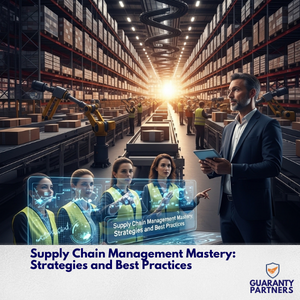
Supply Chain Management Mastery: Strategies and Best Practices
Course Overview
• Gain a comprehensive understanding of supply chain management principles, concepts, and strategies.
• Learn best practices for optimizing supply chain processes to enhance efficiency and effectiveness.
• Develop skills to design, implement, and manage resilient and agile supply chains.
• Explore the latest trends, technologies, and innovations shaping the future of supply chain management.
• Understand the importance of collaboration and coordination among supply chain partners.
• Acquire knowledge of risk management techniques and strategies to mitigate supply chain disruptions.
• Learn how to use data analytics and technology tools to improve supply chain visibility and decision-making.
• Gain insights into sustainable supply chain practices and their impact on business performance.
Training Format:In-class, Virtual, In-house
Location:Lagos, Accra, Nairobi, Kigali
Language:English, French
Nigeria Price:
₦3000000
Int'l., (Nigeria) Price:
$1000
Ghana Price:
$4000
Kenya Price:
$5500
Rwanda Price:
$6000
Nigeria Price:₦3000000
Int'l., (Nigeria) Price:
$1000
Ghana Price:
$4000
Kenya Price:
$4000
Rwanda Price:
$4000
Nigeria Price: ₦3000000
Int'l., (Nigeria) Price:
$1000
Ghana Price: $4000
Kenya Price: $4000
Rwanda Price: $4000
Introduction to Supply Chain Management
• Fundamentals of supply chain management
• Evolution and importance of supply chain management
• Key components and processes of a supply chain
Supply Chain Strategy and Design
• Supply chain strategy formulation
• Network design and optimization
• Outsourcing and offshoring strategies
Supplier Relationship Management
• Supplier selection and evaluation criteria
• Supplier development and performance management
• Collaboration and partnership with suppliers
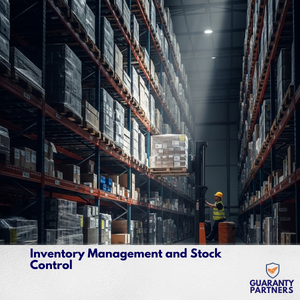
Inventory Management and Optimization
• Inventory control techniques
• Demand forecasting and planning
• Lean and Just-in-Time (JIT) principles in inventory management
Logistics and Transportation Management
• Modes of transportation and their characteristics
• Warehouse management and distribution strategies
• Last-mile delivery and logistics optimization
Demand Management and Fulfillment
• Customer relationship management (CRM)
• Order fulfillment process and order-to-cash cycle
• Demand-driven supply chain strategies
Technology and Digitalization in Supply Chain
• Role of technology in supply chain management
• Supply chain visibility and real-time tracking
• Internet of Things (IoT) and blockchain applications in supply chain
Risk Management and Resilience
• Supply chain risk identification and assessment
• Strategies for managing supply chain disruptions
• Business continuity planning and resilience strategies
Performance Measurement and Continuous Improvement
• Key performance indicators (KPIs) for supply chain management
• Continuous improvement methodologies (e.g., Six Sigma, Kaizen)
• Performance benchmarking and best practices sharing
Sustainable Supply Chain Practices
• Environmental sustainability in supply chain management
• Ethical sourcing and corporate social responsibility (CSR)
• Circular economy and waste reduction strategies in supply chain
Case Studies and Real-world Applications
• Analysis of successful supply chain management case studies
• Application of supply chain principles in different industries
• Lessons learned and best practices sharing from industry leaders
Future Trends and Emerging Technologies
• Emerging trends and technologies shaping the future of supply chain management
• Artificial intelligence (AI) and machine learning in supply chain optimization
• Predictive analytics and prescriptive insights for supply chain decision-making
FOR WHOM:
Stores, Purchasing and Logistics Personnel in the Public and Private Sectors.
1ST BATCH: Tuesday, February 3, 2026 — Friday, February 6, 2026.
2ND BATCH: Tuesday, May 26, 2026 — Friday, May 29, 2026.
3RD BATCH: Tuesday, September 22, 2026 — Friday, September 25, 2026.
The training methodology integrates lectures, interactive discussions, collaborative group exercises, and
illustrative examples. Participants will acquire a blend of theoretical insights and hands-on practical
experience, emphasizing the application of learned techniques. This approach ensures that attendees return
to their professional environments equipped with both the competence and self-assurance to effectively
implement the acquired skills in their responsibilities.