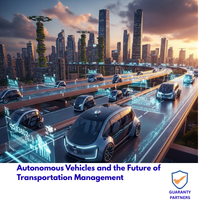
Autonomous Vehicles and the Future of Transportation Management
Course Overview
- Understand the technology behind autonomous vehicles and their implications.
- Explore the integration of autonomous vehicles into transportation systems.
- Learn about the regulatory and ethical considerations for autonomous transportation.
- Examine the impact of autonomous vehicles on urban planning and logistics.
Training Format:In-class, Virtual, In-house
Location:Lagos, Accra, Nairobi, Kigali
Language:English, French
Nigeria Price:
₦3300000
Int'l., (Nigeria) Price:
$1000
Ghana Price:
$4000
Kenya Price:
$5500
Rwanda Price:
$6000
Nigeria Price:₦3300000
Int'l., (Nigeria) Price:
$1000
Ghana Price:
$4000
Kenya Price:
$4000
Rwanda Price:
$4000
Nigeria Price: ₦3300000
Int'l., (Nigeria) Price:
$1000
Ghana Price: $4000
Kenya Price: $4000
Rwanda Price: $4000
Introduction to Autonomous Vehicle Technology
- Overview of autonomous vehicle systems and components
- Levels of vehicle autonomy and their applications
- Role of artificial intelligence and machine learning in automation
- Key challenges in autonomous vehicle development
Integration into Transportation Systems
- Autonomous vehicles in public and private transportation
- Infrastructure requirements for autonomous mobility
- Impact on logistics and supply chain management
- Collaboration between autonomous and traditional vehicles
Regulatory and Ethical Considerations
- Legal frameworks governing autonomous vehicles
- Ethical dilemmas in autonomous decision-making
- Data privacy and cybersecurity concerns
- Policies for ensuring safety and public trust
Impact on Urban Planning and Transportation Management
- Redesigning cities for autonomous transportation
- Effects on traffic management and congestion
- Environmental implications of autonomous fleets
- Future trends in smart transportation systems
1ST BATCH: Tuesday, January 13, 2026 — Friday, January 16, 2026.
2ND BATCH: Tuesday, May 5, 2026 — Friday, May 8, 2026.
3RD BATCH: Tuesday, September 1, 2026 — Friday, September 4, 2026.
The training methodology integrates lectures, interactive discussions, collaborative group exercises, and
illustrative examples. Participants will acquire a blend of theoretical insights and hands-on practical
experience, emphasizing the application of learned techniques. This approach ensures that attendees return
to their professional environments equipped with both the competence and self-assurance to effectively
implement the acquired skills in their responsibilities.