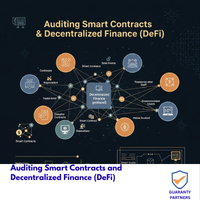
Auditing Smart Contracts and Decentralized Finance (DeFi)

Course Overview


  • Understand the fundamentals of smart contracts and DeFi protocols.
  • Learn how to identify and assess security vulnerabilities in smart contracts.
  • Gain practical skills in performing smart contract audits.
  • Develop an understanding of the best practices for securing DeFi applications.

Training Format:In-class, Virtual, In-house

Location:Lagos, Accra, Nairobi, Kigali

Language:English, French

Nigeria Price:
₦300000

Int'l., (Nigeria) Price:
$1000

Ghana Price:
$4000

Kenya Price:
$5500

Rwanda Price:
$6000

Nigeria Price:₦300000

Int'l., (Nigeria) Price:
$1000

Ghana Price:
$4000

Kenya Price:
$4000

Rwanda Price:
$4000

Nigeria Price: ₦300000

Int'l., (Nigeria) Price:
$1000

Ghana Price: $4000

Kenya Price: $4000

Rwanda Price: $4000

Introduction to Smart Contracts and DeFi

  • Overview of Blockchain and Smart Contracts
    • Basics of blockchain technology
    • Introduction to smart contracts
    • Key features of smart contracts (immutability, automation, trustless execution)
  • Introduction to DeFi
    • What is Decentralized Finance (DeFi)?
    • Key components of DeFi: DEXs, lending platforms, stablecoins, and yield farming
    • Importance of smart contracts in DeFi ecosystems
  • Smart Contract Development and Platforms
    • Ethereum and other blockchain platforms supporting smart contracts
    • Overview of Solidity and development tools (e.g., Remix, Truffle)

Security Risks in Smart Contracts

  • Common Vulnerabilities in Smart Contracts
    • Reentrancy attacks
    • Integer overflow/underflow
    • Front-running attacks
    • Time dependency and Oracle manipulation
  • DeFi-Specific Risks
    • Flash loan attacks
    • Price oracle manipulation
    • Liquidity pool vulnerabilities
  • Case Studies
    • Analysis of past smart contract vulnerabilities and DeFi protocol hacks

Smart Contract Auditing Techniques

  • Audit Methodology
    • Manual review of smart contract code
    • Automated tools for auditing (e.g., MythX, Slither)
    • Gas optimization and efficiency checks
  • Testing and Validation
    • Unit testing smart contracts (e.g., using Hardhat or Truffle)
    • Security testing using fuzzing techniques
  • Audit Report Preparation
    • Identifying and categorizing vulnerabilities
    • Providing remediation recommendations

Best Practices for Smart Contract Security and Future Trends

  • Best Practices for Secure Smart Contract Development
    • Code reviews and security audits
    • Secure coding guidelines for Solidity
    • Using well-known libraries and frameworks
  • Security Standards and Frameworks
    • ERC-20, ERC-721, and other standards for secure token contracts
    • DeFi security frameworks (e.g., OpenZeppelin)
  • Emerging Trends and Future of DeFi Audits
    • Decentralized oracles and security improvements
    • Evolution of DeFi and smart contract auditing techniques
    • Ongoing challenges and innovations in smart contract security

1ST BATCH: Monday, March 16, 2026 — Thursday, March 19, 2026.

2ND BATCH: Tuesday, July 7, 2026 — Friday, July 10, 2026.

3RD BATCH: Tuesday, November 3, 2026 — Friday, November 6, 2026.

The training methodology integrates lectures, interactive discussions, collaborative group exercises, and
illustrative examples. Participants will acquire a blend of theoretical insights and hands-on practical
experience, emphasizing the application of learned techniques. This approach ensures that attendees return
to their professional environments equipped with both the competence and self-assurance to effectively
implement the acquired skills in their responsibilities.

Facebook
WhatsApp
X
Threads
Telegram
Print