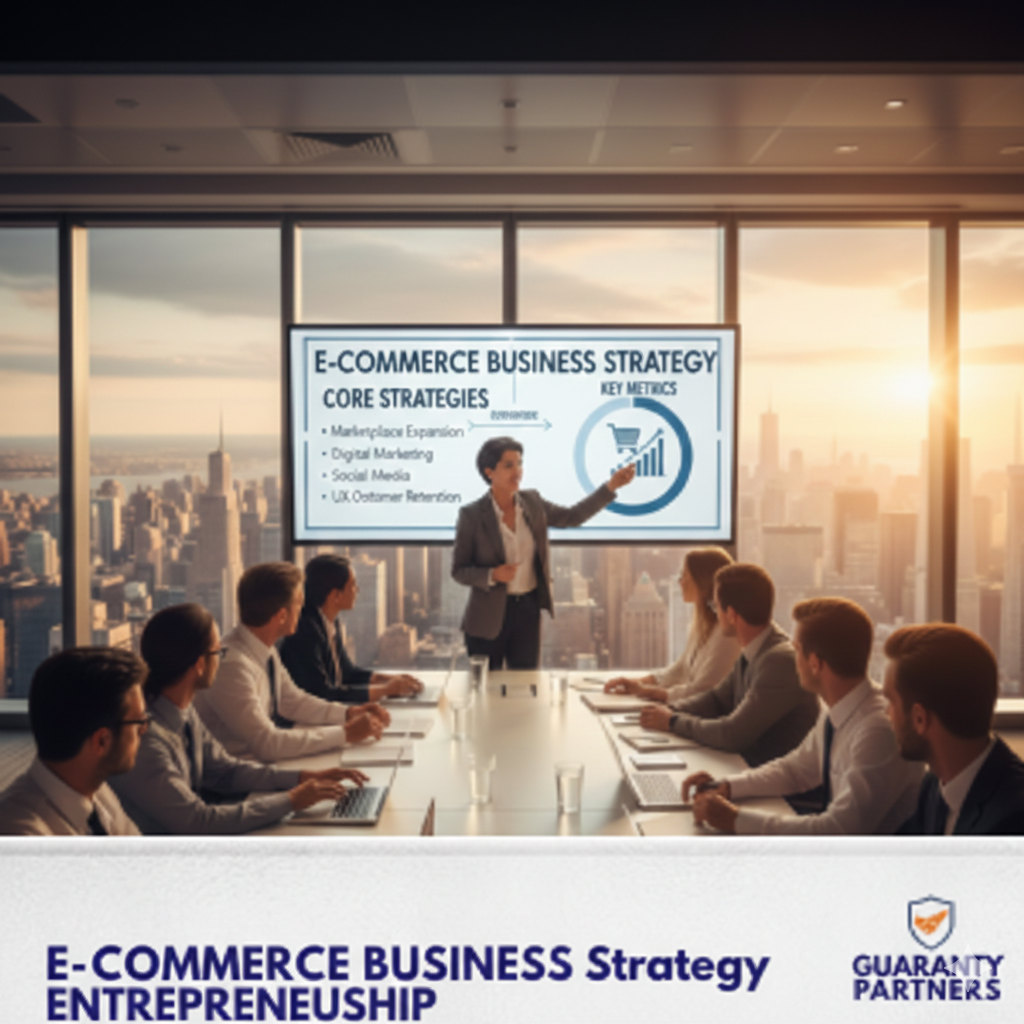
E-Commerce Business Strategy
Course Overview
- Understand the core components of a successful e-commerce business strategy.
- Learn how to build and scale an e-commerce business.
- Explore techniques for customer acquisition, retention, and growth.
- Develop strategies for optimizing operations and maximizing profitability.
Training Format:In-class, Virtual, In-house
Location:Lagos, Accra, Nairobi, Kigali
Language:English, French
Nigeria Price:
₦300000
Int'l., (Nigeria) Price:
$1000
Ghana Price:
$4000
Kenya Price:
$5500
Rwanda Price:
$6000
Nigeria Price:₦300000
Int'l., (Nigeria) Price:
$1000
Ghana Price:
$4000
Kenya Price:
$4000
Rwanda Price:
$4000
Nigeria Price: ₦300000
Int'l., (Nigeria) Price:
$1000
Ghana Price: $4000
Kenya Price: $4000
Rwanda Price: $4000
Foundations of E-Commerce Business Strategy
- Overview of the e-commerce landscape
- Key components of a successful e-commerce business model
- Identifying target markets and consumer behavior
- Choosing the right e-commerce platform
Building and Scaling Your E-Commerce Business
- Developing a business plan for e-commerce
- Product sourcing and inventory management
- Setting up an effective online store and user experience
- Logistics and fulfillment strategies
Customer Acquisition and Retention
- Digital marketing strategies for e-commerce
- Social media, SEO, and email marketing for customer acquisition
- Building customer loyalty and retention strategies
- Personalization and customer experience optimization
Optimizing Operations and Maximizing Profitability
- Analyzing key performance indicators (KPIs) for e-commerce
- Pricing strategies and competitive analysis
- Managing supply chain and reducing operational costs
- Leveraging data and analytics for business growth
1ST BATCH: Monday, March 16, 2026 — Thursday, March 19, 2026.
2ND BATCH: Tuesday, July 14, 2026 — Friday, July 17, 2026.
3RD BATCH: Tuesday, November 10, 2026 — Friday, November 13, 2026.
The training methodology integrates lectures, interactive discussions, collaborative group exercises, and
illustrative examples. Participants will acquire a blend of theoretical insights and hands-on practical
experience, emphasizing the application of learned techniques. This approach ensures that attendees return
to their professional environments equipped with both the competence and self-assurance to effectively
implement the acquired skills in their responsibilities.