
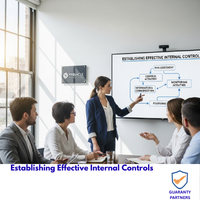
Establishing Effective Internal Controls
Course Overview
• Ensure compliance with government laws, rules, and regulations
• Strengthen the overall financial health of your organization
• Avoid careless — and costly! — financial practices
• Take stock of existing controls and identify weak spots
• Put systems in place to ensure legal compliance
• Gain a solid understanding of SOX, AICPA, and COSO
• Discover the objectives, components, and requirements of effective internal controls
Training Format:In-class, Virtual, In-house
Location:Lagos, Accra, Nairobi, Kigali
Language:English, French
Nigeria Price:
₦300000
Int'l., (Nigeria) Price:
$1000
Ghana Price:
$4000
Kenya Price:
$5500
Rwanda Price:
$6000
Nigeria Price:₦300000
Int'l., (Nigeria) Price:
$1000
Ghana Price:
$4000
Kenya Price:
$4000
Rwanda Price:
$4000
Nigeria Price: ₦300000
Int'l., (Nigeria) Price:
$1000
Ghana Price: $4000
Kenya Price: $4000
Rwanda Price: $4000
Internal Controls Essentials
• Proven procedures for developing strong internal controls
• Types of internal controls that are critical to your organization’s financial health and operations
• The components of an internal controls system, and the criteria for assuring the effectiveness of each component
• SOX, COSO, and AICPA — gain a working understanding of the recommendations and requirements of each
• Methods for establishing systems that continually assure legal compliance, both short and long term
• Case Study: When careless practices cost … and cost BIG! Learn from the mistakes, missteps, and oversights of otherwise strong organizations
• How to examine your existing internal controls and pinpoint trouble spots before they get out of hand
• Criteria to define just how strict, stringent, or structured your internal control procedures should be
Risk Assessment and Management
• Today’s definition and scope of risk in the business environment
• Effective ways of determining risks and assessing potential impact
• How to use “dimensions of risk” to anticipate business process needs
• Hypothetical risk? Or a likely “risk reality”? How to realistically assess risk exposure and its impact to your organization
• Methods for trouble-shooting risk “hot spots” in your organization
Sarbanes-Oxley: Understanding and Complying with the Requirements
• How Sarbanes-Oxley (SOX) has changed the legal ramifications of today’s internal control systems
• SOX, COSO, AICPA: how they work together, how they relate to each other, and how they affect your organization
• What internal controls are critical for SOX compliance?
• How to make sure your financial reporting and documentation is in line with SOX requirements
• Tips for ensuring compliance with SOX 302 and 404
• “Management Assessment of Internal Controls” — actions your accounting department needs to take to comply with this section of SOX
Operational Audits, Assessments, and Controls
• The purposes and desired outcomes of Operational Audits: why the OA is crucial to organizational effectiveness
• The core elements of Operational Audits
• Prevention and Detection: ways to improve your operations by building these essential elements into your processes
• When outside audit assessment is called for — how to locate a contractor and get the precise operational help you need
• Essentials of accounting audits — best practices to ensure effectiveness
• How to safeguard your organization against fraud, misconduct, sloppiness, and ethics breaches — the “Achilles Heel” issues of accounting controls
FOR WHOM
This program is designed for financial professionals, business leaders, managers, supervisors — anyone who is involved in the day-to-day financial workings of an organization, as well as those who must oversee legal, financial, and accounting operations.
1ST BATCH: Monday, March 30, 2026 — Thursday, April 2, 2026.
2ND BATCH: Tuesday, July 21, 2026 — Friday, July 24, 2026.
3RD BATCH: Tuesday, November 17, 2026 — Friday, November 20, 2026.
The training methodology integrates lectures, interactive discussions, collaborative group exercises, and
illustrative examples. Participants will acquire a blend of theoretical insights and hands-on practical
experience, emphasizing the application of learned techniques. This approach ensures that attendees return
to their professional environments equipped with both the competence and self-assurance to effectively
implement the acquired skills in their responsibilities.