Financial Statement and Fraud Detection
Course Overview
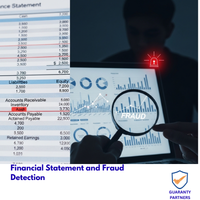
The internal audit’s role in detecting financial statement fraud by identifying potentially significant or likely financial statements fraud schemes and developing audit steps to help detect them.
Training Format:In-class, Virtual, In-house
Location:Lagos, Accra, Nairobi, Kigali
Language:English, French
Nigeria Price:
₦3300000
Int'l., (Nigeria) Price:
$1000
Ghana Price:
$4000
Kenya Price:
$5500
Rwanda Price:
$6000
Nigeria Price:₦3300000
Int'l., (Nigeria) Price:
$1000
Ghana Price:
$4000
Kenya Price:
$4000
Rwanda Price:
$4000
Nigeria Price: ₦3300000
Int'l., (Nigeria) Price:
$1000
Ghana Price: $4000
Kenya Price: $4000
Rwanda Price: $4000
Manipulation of Assets
- Accounts Receivable Schemes
- Inventory Schemes
- Fixed Asset Schemes
Manipulation of Liabilities
- Accounts payable Schemes
- Manipulation of Reserves
- Improper Disclosures
Deterring and Detecting Financial Statement Fraud
- Financial Statement Fraud
- Internal Auditor’s role in deterring and detecting Financial Statement Fraud
- Identifying Differences between key Industries
Responding to Indication of Potential Financial Statement Fraud
- Fraud Investigation
- Consultation with Legal Counsel
- Identifying Boundaries of Potential Conflicts
Revenue Recognition Manipulation
- Recording Fictitious Revenue
- Revenue From Sales Billed, but not shipped (“Bill and Hold”)
- Accounting Improperly
- Inappropriate Revenue
FOR WHOM:
All Internal Auditors, IT Managers, IT Personnel in the Public and Private Sectors.
1ST BATCH: Tuesday, April 7, 2026 — Friday, April 10, 2026.
2ND BATCH: Tuesday, July 28, 2026 — Friday, July 31, 2026.
3RD BATCH: Tuesday, November 24, 2026 — Friday, November 27, 2026.
The training methodology integrates lectures, interactive discussions, collaborative group exercises, and
illustrative examples. Participants will acquire a blend of theoretical insights and hands-on practical
experience, emphasizing the application of learned techniques. This approach ensures that attendees return
to their professional environments equipped with both the competence and self-assurance to effectively
implement the acquired skills in their responsibilities.