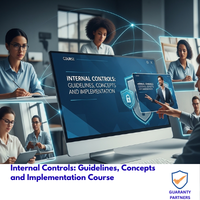
Internal Controls: Guidelines, Concepts and Implementation Course
Course Overview
– The factors behind each component of internal control
– How to measure risk likelihood and its potential impact
Training Format:In-class, Virtual, In-house
Location:Lagos, Accra, Nairobi, Kigali
Language:English, French
Nigeria Price:
₦300000
Int'l., (Nigeria) Price:
$1000
Ghana Price:
$4000
Kenya Price:
$5500
Rwanda Price:
$6000
Nigeria Price:₦300000
Int'l., (Nigeria) Price:
$1000
Ghana Price:
$4000
Kenya Price:
$4000
Rwanda Price:
$4000
Nigeria Price: ₦300000
Int'l., (Nigeria) Price:
$1000
Ghana Price: $4000
Kenya Price: $4000
Rwanda Price: $4000
Defining Internal Controls
- Understanding the objectives of sound internal controls
- Establishing which control framework is right for your organization
- Meeting the objectives that internal controls must satisfy
Creating the Internal Control Structure
- Understanding the components of Internal Controls
- Hard controls vs Soft Controls
- Creating the control environment
- Monitoring the control framework
Risk Assessment and Considerations
- Establishing strategic objectives
- Defining, Measuring, Evaluating Risk Risk-Management strategies
Establishing Internal Accounting Controls
- Internal accounting control categories
- Strategies for preventing fraud in your cycles
- Financial audits
Managing Control Activities to Minimize Risks
- Reviewing operational auditing
- Prevention vs detection control types
- How to create an operational audit program
- The steps to creating an individual audit program
Monitoring and Reporting on Internal Controls
- Creating and implementing a testing system
- Manual vs technology-based monitoring
- Elements of effective internal controls reports
- How to create reports
FOR WHOM:
All Internal Auditors in both the Public and Private Sectors.
1ST BATCH: Tuesday, April 7, 2026 — Friday, April 10, 2026.
2ND BATCH: Tuesday, July 28, 2026 — Friday, July 31, 2026.
3RD BATCH: Tuesday, November 24, 2026 — Friday, November 27, 2026.
The training methodology integrates lectures, interactive discussions, collaborative group exercises, and
illustrative examples. Participants will acquire a blend of theoretical insights and hands-on practical
experience, emphasizing the application of learned techniques. This approach ensures that attendees return
to their professional environments equipped with both the competence and self-assurance to effectively
implement the acquired skills in their responsibilities.