
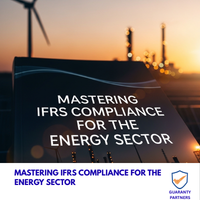
MASTERING IFRS COMPLIANCE FOR THE ENERGY SECTOR
Course Overview
By the end of this training course, participants will be able to:
• Understand the fundamental principles and concepts of IFRS and their application in the energy sector.
• Gain proficiency in applying IFRS standards to complex transactions and accounting issues commonly encountered in the energy industry, such as exploration and production activities, asset valuation, and revenue recognition
• Learn best practices for implementing IFRS-compliant financial reporting processes and controls tailored to the unique characteristics of energy companies
• Develop the skills to interpret and analyze financial statements prepared in accordance with IFRS, including balance sheets, income statements, and cash flow statements
• Acquire practical insights into emerging trends, regulatory developments, and challenges related to IFRS compliance in the energy sector
Training Format:In-class, Virtual, In-house
Location:Lagos, Accra, Nairobi, Kigali
Language:English, French
Nigeria Price:
₦330000
Int'l., (Nigeria) Price:
$1000
Ghana Price:
$4000
Kenya Price:
$5500
Rwanda Price:
$6000
Nigeria Price:₦330000
Int'l., (Nigeria) Price:
$1000
Ghana Price:
$4000
Kenya Price:
$4000
Rwanda Price:
$4000
Nigeria Price: ₦330000
Int'l., (Nigeria) Price:
$1000
Ghana Price: $4000
Kenya Price: $4000
Rwanda Price: $4000
Introduction to IFRS in the Energy Sector
• Overview of International Financial Reporting Standards (IFRS)
• Importance of IFRS Compliance for Energy Companies
• Key IFRS Principles and Concepts
• IFRS Implementation Challenges and Considerations in the Energy Industry
Exploration and Production Accounting
• Accounting for Exploration and Development Costs
• Asset Valuation Methods: Full Cost vs. Successful Efforts
• Impairment Testing for Exploration and Production Assets
• Case Studies: Accounting for Oil and Gas Reserves and Reservoir Development
Revenue Recognition and Contract Accounting
• IFRS 15: Revenue from Contracts with Customers
• Revenue Recognition Challenges in the Energy Sector
• Accounting for Long-Term Contracts and Service Agreements
• Case Studies: Revenue Recognition for Energy Sales and Service Contracts
Financial Reporting and Disclosure
• Preparation of Financial Statements under IFRS
• Balance Sheet Presentation: Assets, Liabilities, and Equity
• Income Statement and Statement of Cash Flows
• Notes to the Financial Statements: Disclosures and Reporting Considerations
Emerging Issues and Best Practices
• Emerging Trends and Developments in IFRS for the Energy Sector
• Best Practices for IFRS Compliance and Financial Reporting Processes
• Case Studies: Analyzing Financial Statements of Energy Companies
• Closing Remarks: Leveraging IFRS Compliance for Financial Transparency and Growth in the Energy Industry
1ST BATCH: Tuesday, April 21, 2026 — Friday, April 24, 2026.
2ND BATCH: Tuesday, August 11, 2026 — Friday, August 14, 2026.
3RD BATCH: Tuesday, December 8, 2026 — Friday, December 11, 2026.
The training methodology integrates lectures, interactive discussions, collaborative group exercises, and
illustrative examples. Participants will acquire a blend of theoretical insights and hands-on practical
experience, emphasizing the application of learned techniques. This approach ensures that attendees return
to their professional environments equipped with both the competence and self-assurance to effectively
implement the acquired skills in their responsibilities.