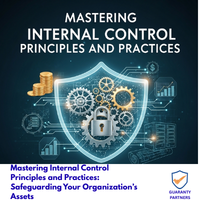
Mastering Internal Control Principles and Practices: Safeguarding Your Organization’s Assets

Course Overview

• Understand the fundamental principles and importance of internal controls in organizational governance and risk management.
• Learn to identify key risks and vulnerabilities within business processes and operations.
• Develop proficiency in designing and implementing effective internal control frameworks tailored to organizational needs and objectives.
• Acquire practical skills in assessing, monitoring, and evaluating the effectiveness of internal controls.
• Enhance awareness of regulatory requirements, compliance standards, and best practices related to internal control management.
• Gain insights into leveraging technology and automation tools to enhance internal control effectiveness and efficiency.

Training Format:In-class, Virtual, In-house

Location:Lagos, Accra, Nairobi, Kigali

Language:English, French

Nigeria Price:
₦3300000

Int'l., (Nigeria) Price:
$1000

Ghana Price:
$4000

Kenya Price:
$5500

Rwanda Price:
$6000

Nigeria Price:₦3300000

Int'l., (Nigeria) Price:
$1000

Ghana Price:
$4000

Kenya Price:
$4000

Rwanda Price:
$4000

Nigeria Price: ₦3300000

Int'l., (Nigeria) Price:
$1000

Ghana Price: $4000

Kenya Price: $4000

Rwanda Price: $4000

Introduction to Internal Control Principles
• Definition and objectives of internal control
• Importance of internal controls in organizational governance and risk management
• Overview of internal control frameworks (e.g., COSO, COBIT)

Risk Identification and Assessment
• Understanding business risks and vulnerabilities
• Techniques for identifying and prioritizing key risks
• Conducting risk assessments and developing risk registers

Designing Effective Internal Control Frameworks
• Principles of designing robust internal control systems
• Segregation of duties, authorization, and approval controls
• Implementing preventive, detective, and corrective controls

Implementation and Documentation
• Steps for implementing internal control procedures and processes
• Documenting control activities, policies, and procedures
• Communication and training on internal control standards and expectations

Monitoring and Evaluation
• Techniques for monitoring and evaluating the effectiveness of internal controls
• Conducting internal control reviews and assessments
• Remediation of control deficiencies and continuous improvement

Compliance and Regulatory Requirements
• Understanding regulatory requirements and compliance standards (e.g., Sarbanes-Oxley Act, GDPR)
• Aligning internal controls with regulatory expectations and industry best practices
• Role of internal audit and external auditors in assessing internal control effectiveness

Leveraging Technology for Internal Control Enhancement
• Role of technology and automation in enhancing internal control effectiveness
• Implementing internal control software solutions and tools
• Leveraging data analytics for monitoring and detecting control anomalies

FOR WHOM:
All Internal Auditors and Risk Managers in the Public and Private Sectors.
1ST BATCH: Tuesday, April 14, 2026 — Friday, April 17, 2026.

2ND BATCH: Tuesday, August 4, 2026 — Friday, August 7, 2026.

3RD BATCH: Tuesday, December 1, 2026 — Friday, December 4, 2026.

The training methodology integrates lectures, interactive discussions, collaborative group exercises, and
illustrative examples. Participants will acquire a blend of theoretical insights and hands-on practical
experience, emphasizing the application of learned techniques. This approach ensures that attendees return
to their professional environments equipped with both the competence and self-assurance to effectively
implement the acquired skills in their responsibilities.

Facebook
WhatsApp
X
Threads
Telegram
Print