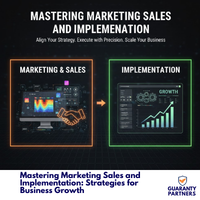
Predictive Analytics for Sales Growth and Market Insights
Course Overview
- Understand the fundamentals of predictive analytics and its applications in sales and marketing.
- Develop skills to analyze historical data for forecasting sales growth.
- Learn techniques for identifying market trends and customer behavior patterns.
- Implement predictive models to drive business decisions and optimize sales strategies.
Training Format:In-class, Virtual, In-house
Location:Lagos, Accra, Nairobi, Kigali
Language:English, French
Nigeria Price:
₦330000
Int'l., (Nigeria) Price:
$1000
Ghana Price:
$4000
Kenya Price:
$5500
Rwanda Price:
$6000
Nigeria Price:₦330000
Int'l., (Nigeria) Price:
$1000
Ghana Price:
$4000
Kenya Price:
$4000
Rwanda Price:
$4000
Nigeria Price: ₦330000
Int'l., (Nigeria) Price:
$1000
Ghana Price: $4000
Kenya Price: $4000
Rwanda Price: $4000
Introduction to Predictive Analytics
- Overview of predictive analytics and its role in business
- Key concepts in data analysis and forecasting
- Types of predictive models and their applications
- Tools and software for predictive analytics
Analyzing Historical Data for Sales Forecasting
- Collecting and preparing data for analysis
- Identifying relevant sales metrics and KPIs
- Time series analysis and trend identification
- Techniques for building accurate sales forecasts
Market Segmentation and Customer Behavior Insights
- Segmenting markets based on data-driven insights
- Predicting customer needs and behavior patterns
- Analyzing purchasing trends and customer lifetime value
- Personalization strategies for targeted marketing
Implementing Predictive Models for Sales Optimization
- Building predictive models for sales strategies
- Integrating predictive analytics with CRM systems
- Measuring the success of predictive models
- Continuous improvement and refinement of models based on results
1ST BATCH: Tuesday, March 24, 2026 — Friday, March 27, 2026.
2ND BATCH: Tuesday, July 14, 2026 — Friday, July 17, 2026.
3RD BATCH: Tuesday, November 10, 2026 — Friday, November 13, 2026.
The training methodology integrates lectures, interactive discussions, collaborative group exercises, and
illustrative examples. Participants will acquire a blend of theoretical insights and hands-on practical
experience, emphasizing the application of learned techniques. This approach ensures that attendees return
to their professional environments equipped with both the competence and self-assurance to effectively
implement the acquired skills in their responsibilities.