
Strategic Business Planning
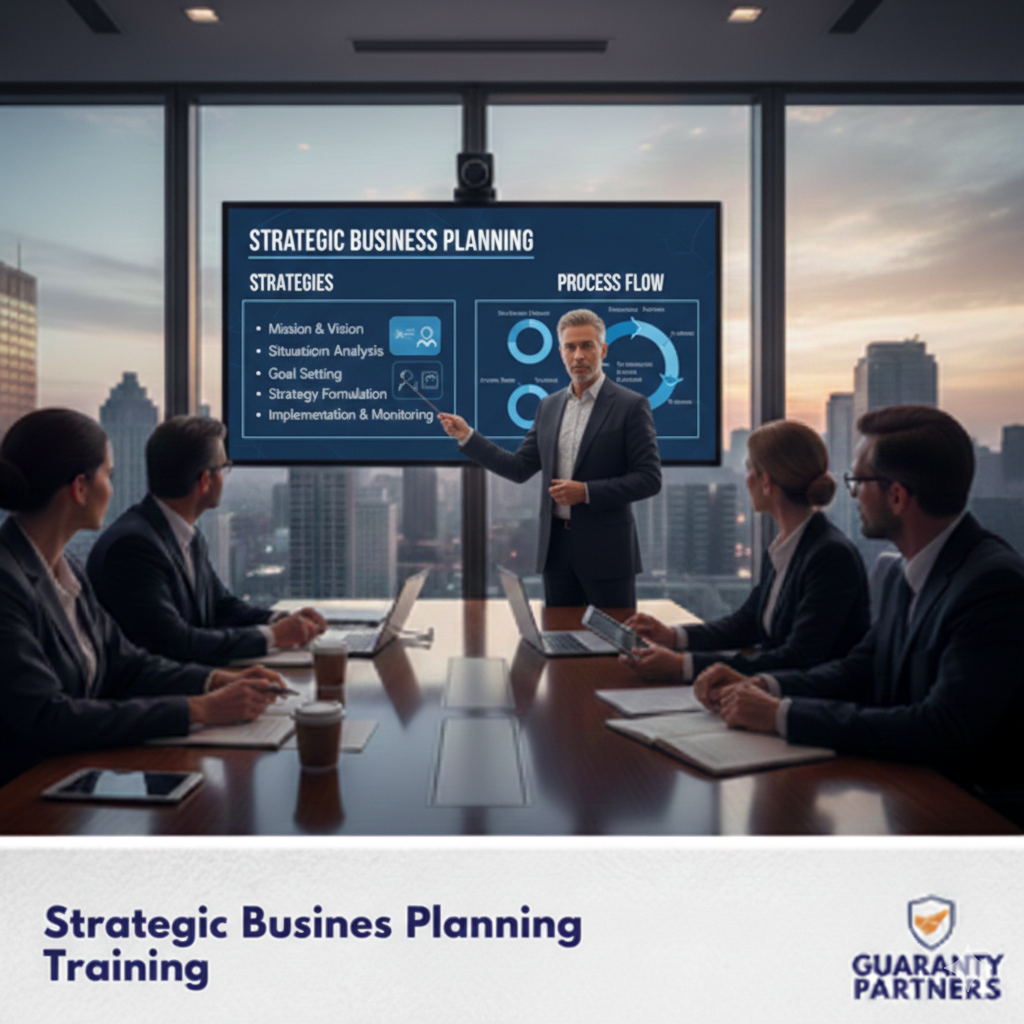
Course Overview
By the end of the Strategic Business Planning course, participants will be able to:
• Explain the importance of a well-thought-out business plan for the success of the organization
• Describe the structure of a business plan and how it caters to market and organizational needs
• Apply the business plan development process to create a well-structured, convincing business plan covering all vital elements
• Develop a business plan that includes a detailed, practical and effective implementation strategy
• Evaluate the progress of the implementation of the business plan and take necessary corrective steps
Training Format:In-class, Virtual, In-house
Location:Lagos, Accra, Nairobi, Kigali
Language:English, French
Nigeria Price:
₦300000
Int'l., (Nigeria) Price:
$1000
Ghana Price:
$4000
Kenya Price:
$5500
Rwanda Price:
$6000
Nigeria Price:₦300000
Int'l., (Nigeria) Price:
$1000
Ghana Price:
$4000
Kenya Price:
$4000
Rwanda Price:
$4000
Nigeria Price: ₦300000
Int'l., (Nigeria) Price:
$1000
Ghana Price: $4000
Kenya Price: $4000
Rwanda Price: $4000
Analysing the Corporate and Business Strategy Set Out in the Plan
• What is the “mission statement”
• Are the objectives clear
• What is the corporate strategy of the business
• What time scale; short medium or long term
• How will success be benchmarked
• Who will drive the vision and who will implement it
• What is the business strategy
• How will business goals be achieved
• Are they realistic
• Who will accomplish this
• How will success or failure be measured
• Does it make sense
• Do you have confidence that both objectives can be achieved
• What does progress so far and the track record to date tell you
Industry Analysis – What does The Plan Cover
• The current state of the industry
• The target market
• Reference materials
• Spreadsheets
• pie charts
• bar graphs
• Other relevant data.
• Historical data about the nature of the industry
• Growth potential based on economic factors and conditions.
• A list of the major competitors in the industry
• A brief summary of their operations and similar products or services.
• A summary of the nature of the industry
• Specific information and statistics about growth patterns, fluctuations related to the economy and income projections made about the industry.
• A forecast for the industry.
• Data and industry predictions for the next five, 10 and 20 years.
• Government regulations that affect the industry.
• Is there a Competitive Analysis and Unique Selling Proposition as well as data for the direct and indirect competition
• Is there a realistic list potential stumbling blocks.
An Analysis of Management
• The board and the non–executives
• The Chairman and the CEO
• Senior Management
• For both the above
• Track record
• Reputation
• Skillsets
• Age and Experience
• Qualifications
• Previous roles
• The risk/reward proposition
• Can they make it happen in your view
• Is there a disconnect
• Does all management buy-in to the Plan
• Were key players consulted
• What is your experience of dealing with the team
• What do your existing respected clients say about them
• What is the industry view
• Is the chain of command optimal
• Flat or top-down or bottom-up style
• What is your view of them
• If there are any meaningful doubts, walk away
Target Market in the Plan
• What is the target market
• Is there a group of customers that have a similar need for the product or service
• Will those potential clients buy the product
• Is the business satisfying an existing need or creating a new product
• Demographics analysis
• Geographic analysis
• Psychographic analysis – Why do they buy?
• Behaviouristic: What makes the target clients decide to do business with you
• Can this be achieved
• What is the evidence to date
• What have competitors done
Competition Analysis
• Who are the most important competitors?
• What are their main strengths and weaknesses?
• How can this business be different?
• How can the product or service be more competitive?
• What are competitors’ pricing policies?
• How do these affect the projected sales strategies?
• Are main competitors and their estimated market shares listed and understood?
Human Resources & Operations in the Plan
• What is the existing Management Structure
• What management tools are used
• Who actually runs the business
• How many people are employed and will be employed (Full Time / Part-Time)
• What types of skills and/or experience are already in place.
• What is needed
• What training will the workforce require to be able to meet the future plans?
• What measures will be adopted to ensure employee loyalty?
• Incentives & compensation systems – will they help drive value creation
• How soon will it be necessary to expand the workforce?
Implementing the Plan
• What Balanced scorecard will be used
• Is it tried and tested and fit for purpose
• Change management capabilities
• Key drivers
• Key responsibilities
• KRI’s & KPI’s
• How will success be measured
• What will the early warning signs be
• Who will have strategic control and oversight responsibility
• What MI or data will be made available to enable stakeholders to review progress
1ST BATCH: Tuesday, March 3, 2026 — Friday, March 6, 2026.
2ND BATCH: Tuesday, July 7, 2026 — Friday, July 10, 2026.
3RD BATCH: Tuesday, November 3, 2026 — Friday, November 6, 2026.
The training methodology integrates lectures, interactive discussions, collaborative group exercises, and
illustrative examples. Participants will acquire a blend of theoretical insights and hands-on practical
experience, emphasizing the application of learned techniques. This approach ensures that attendees return
to their professional environments equipped with both the competence and self-assurance to effectively
implement the acquired skills in their responsibilities.