
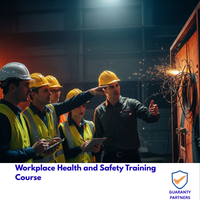
Workplace Health and Safety Training Course
Course Overview
Upon completing this Workplace Health and Safety Training Course successfully, participants will be able to:
• Define work health and safety
• Justify why health and safety is important in the workplace
• Explain the potential consequences of breaching work health and safety laws
• Define the roles and responsibilities in managing workplace health and safety
• Clarify how to identify hazards and determine the risks that they pose
• Explain how to apply measures to control risks
• Describe what an accident is and identify the direct and indirect causes of accidents
• Outline the roles and responsibilities in emergency management
• Plan how to prepare for an emergency
• Understand how fires can start and how they can be averted
• Recognise how to avoid injuries from manual tasks
Training Format:In-class, Virtual, In-house
Location:Lagos, Accra, Nairobi, Kigali
Language:English, French
Nigeria Price:
₦3500000
Int'l., (Nigeria) Price:
$1000
Ghana Price:
$4000
Kenya Price:
$5500
Rwanda Price:
$6000
Nigeria Price:₦3500000
Int'l., (Nigeria) Price:
$1000
Ghana Price:
$4000
Kenya Price:
$4000
Rwanda Price:
$4000
Nigeria Price: ₦3500000
Int'l., (Nigeria) Price:
$1000
Ghana Price: $4000
Kenya Price: $4000
Rwanda Price: $4000
INTRODUCTION TO HEALTH AND SAFETY
• What is health & safety?
• Health and safety at your workplace
• A note about your workspace
• Introduction to health and safety at work””””
• Risk assessments
REPORTING OF INJURIES, DISEASES AND DANGEROUS OCCURRENCES REGULATIONS (RIDDOR)
• Accidents, incidents, and injuries
• The RIDDOR framework
• Accident book
• Health and safety made simple – the basics for your business
• The health and safety toolbox
• Who should report?
o An employer or in control of premises
o Self-employed
o A member of the public, employee, injured person, or a representative
o Gas suppliers
o Gas engineers
o Working offshore
o The responsible person
• What must be reported?
o Deaths and injuries caused by workplace accidents
o Occupational diseases
o Carcinogens, mutagens, and biological agents
o Specified injuries to workers
o Dangerous occurrences
o Gas incidents
o Reportable incidents
FIRST AID
• First aid kit
• Does my first aid kit stand up to the test?
• Wounds
• Heart
• Fractures
• Burns
• Poisoning
• Haemorrhages
• Injuries
• Shock
FIRE SAFETY
• Fire safety
• What are the elements of fire?
• Fuel (Combustible Substance)
• Oxygen
• Heat
• Chain chemical reaction
• How fire spreads?
• Fire protection
• Control of Substances Hazardous to Health (COSHH)
• COSHH Additional information
• Fire terminology
• Classification of fires
• Types of fire extinguishers
• Extinguishing the fire
• Usage of fire extinguishers
• Employees’ responsibilities
• Actions in the event of a fire
FIRE RISK ASSESSMENT
• Fire risk assessment
• Risks and precautions
• Recording the findings
• Emergency Evacuation Procedures
• The importance of reviews
MANUAL & LONE WORKING
• Manual handling
• Lone working
• Managing clinical waste
• Keeping safe when working alone
• Work Equipment Regulations 1998
INDUSTRIAL HYGIENE
• Hazards in the workplace
• Entry points for toxic agents
• Airborne contaminants
• Asbestos hazards
• Hazard recognition, evaluation, and control
STRESS AND SAFETY
• Workplace stress defined
• Sources of workplace stress
• Human reaction to workplace stress
• Measurement of workplace stress
• Shift work, stress, and safety
• Improving safety by reducing stress
• Stress in safety managers
• Stress and workers compensation
1ST BATCH: Tuesday, April 7, 2026 — Friday, April 10, 2026.
2ND BATCH: Tuesday, July 28, 2026 — Friday, July 31, 2026.
3RD BATCH: Tuesday, November 24, 2026 — Friday, November 27, 2026.
The training methodology integrates lectures, interactive discussions, collaborative group exercises, and
illustrative examples. Participants will acquire a blend of theoretical insights and hands-on practical
experience, emphasizing the application of learned techniques. This approach ensures that attendees return
to their professional environments equipped with both the competence and self-assurance to effectively
implement the acquired skills in their responsibilities.