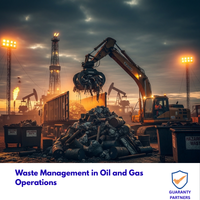
Waste Management in Oil and Gas Operations
Course Overview
- Understand the types and sources of waste in oil and gas operations.
- Learn the regulations and standards for waste management in the industry.
- Gain insights into best practices for waste reduction, recycling, and disposal.
- Explore innovative technologies and solutions for waste management in oil and gas.
Training Format:In-class, Virtual, In-house
Location:Lagos, Accra, Nairobi, Kigali
Language:English, French
Nigeria Price:
₦360000
Int'l., (Nigeria) Price:
$1000
Ghana Price:
$4000
Kenya Price:
$5500
Rwanda Price:
$6000
Nigeria Price:₦360000
Int'l., (Nigeria) Price:
$1000
Ghana Price:
$4000
Kenya Price:
$4000
Rwanda Price:
$4000
Nigeria Price: ₦360000
Int'l., (Nigeria) Price:
$1000
Ghana Price: $4000
Kenya Price: $4000
Rwanda Price: $4000
Introduction to Waste in Oil and Gas Operations
- Overview of waste types: hazardous, non-hazardous, and radioactive waste.
- Sources of waste in upstream and downstream oil and gas operations.
- Environmental impact of waste in the oil and gas sector.
- Waste classification and characterization.
Regulatory Framework and Standards
- International and national regulations governing waste management.
- Key standards: ISO 14001, EPA guidelines, and OHSAS 18001.
- Legal obligations and compliance for waste disposal.
- Reporting and documentation requirements for waste management.
Waste Minimization and Recycling
- Strategies for waste reduction at source.
- Waste segregation techniques for effective recycling.
- Case studies of successful recycling programs in oil and gas.
- Reuse and repurposing of materials in operations.
Innovative Waste Management Technologies
- Emerging technologies in waste treatment and disposal.
- Bioremediation and its application in oil and gas operations.
- Waste-to-energy technologies for oil and gas facilities.
1ST BATCH: Monday, March 16, 2026 — Thursday, March 19, 2026.
2ND BATCH: Tuesday, July 14, 2026 — Friday, July 17, 2026.
3RD BATCH: Tuesday, November 10, 2026 — Friday, November 13, 2026.
The training methodology integrates lectures, interactive discussions, collaborative group exercises, and
illustrative examples. Participants will acquire a blend of theoretical insights and hands-on practical
experience, emphasizing the application of learned techniques. This approach ensures that attendees return
to their professional environments equipped with both the competence and self-assurance to effectively
implement the acquired skills in their responsibilities.