Fundamentals of Bookkeeping and Basic Accounting for Non-Accountants
Course Overview
By the end of this course, participants will be able to:
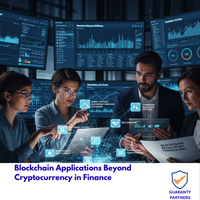
• Understand the fundamentals of blockchain technology and its applications beyond cryptocurrency.
• Recognize the role of blockchain in transforming the financial services industry.
• Identify key use cases of blockchain technology in areas such as payments, supply chain management, lending, and compliance.
• Assess the impact of blockchain on financial operations, security, and transparency.
• Explore practical examples of blockchain adoption in financial institutions and organizations.
• Gain insights into the regulatory and legal challenges associated with blockchain in finance.
Training Format:In-class, Virtual, In-house
Location:Lagos, Accra, Nairobi, Kigali
Language:English, French
Nigeria Price:
₦33000
Int'l., (Nigeria) Price:
$1000
Ghana Price:
$4000
Kenya Price:
$5500
Rwanda Price:
$6000
Nigeria Price:₦33000
Int'l., (Nigeria) Price:
$1000
Ghana Price:
$4000
Kenya Price:
$4000
Rwanda Price:
$4000
Nigeria Price: ₦33000
Int'l., (Nigeria) Price:
$1000
Ghana Price: $4000
Kenya Price: $4000
Rwanda Price: $4000
Introduction to Blockchain Technology
• Overview of Blockchain: Definition, Key Characteristics, and Components
• Blockchain vs. Traditional Databases
• Types of Blockchain: Public, Private, and Consortium Blockchains
• Consensus Mechanisms (Proof of Work, Proof of Stake, etc.)
• Smart Contracts: Definition and Use Cases
Blockchain Beyond Cryptocurrency
• The Evolution of Blockchain: From Bitcoin to Enterprise Solutions
• Blockchain as a Distributed Ledger Technology (DLT)
• Key Blockchain Platforms: Ethereum, Hyperledger, and Corda
- Blockchain Applications in Finance
• Payments and Remittances:
o How Blockchain is Revolutionizing Cross-Border Payments
o Reducing Transaction Costs and Time Lags in Payment Systems
o Use Cases: Ripple, Stellar, and Central Bank Digital Currencies (CBDCs)
• Supply Chain Finance:
o Improving Transparency and Traceability in Supply Chains
o Blockchain for Supplier Financing and Payments
o Use Case: TradeLens (IBM and Maersk)
• Lending and Borrowing:
o Peer-to-Peer Lending and Decentralized Finance (DeFi)
o Blockchain in Credit Scoring and Loan Origination
o Use Case: Compound, Aave, and MakerDAO in DeFi Lending
• Smart Contracts in Finance:
o Streamlining Contracts for Financial Transactions
o Use of Smart Contracts in Insurance, Syndicated Loans, and Derivatives
• Regulatory Compliance and KYC (Know Your Customer):
o Blockchain for Identity Management and Anti-Money Laundering (AML)
o Enhancing Know Your Customer (KYC) Processes with Blockchain
o Use Case: The use of blockchain in AML and KYC in banking
Blockchain and Financial Security
• Enhancing Security in Financial Transactions with Blockchain
• Blockchain’s Role in Preventing Fraud and Data Breaches
• The Role of Blockchain in Cybersecurity for Financial Institutions
Blockchain in Asset Management and Trading
• Tokenization of Assets: Real Estate, Equities, and Commodities
• Blockchain for Securing Trade Settlement and Clearing
• Use Case: Tokenized Securities and Blockchain-Based Trading Platforms
• Blockchain in Wealth Management and Investor Onboarding
Challenges and Opportunities of Blockchain in Finance
• Regulatory Challenges: Global Adoption and Compliance
• Blockchain’s Impact on Traditional Financial Institutions
• Scalability and Interoperability Issues
• Privacy Concerns and Solutions in Financial Transactions
• Blockchain Integration with Legacy Financial Systems
1ST BATCH: Monday, March 16, 2026 — Thursday, February 19, 2026.
2ND BATCH: Tuesday, July 7, 2026 — Friday, July 10, 2026.
3RD BATCH: Tuesday, November 3, 2026 — Friday, November 6, 2026.
The training methodology integrates lectures, interactive discussions, collaborative group exercises, and
illustrative examples. Participants will acquire a blend of theoretical insights and hands-on practical
experience, emphasizing the application of learned techniques. This approach ensures that attendees return
to their professional environments equipped with both the competence and self-assurance to effectively
implement the acquired skills in their responsibilities.